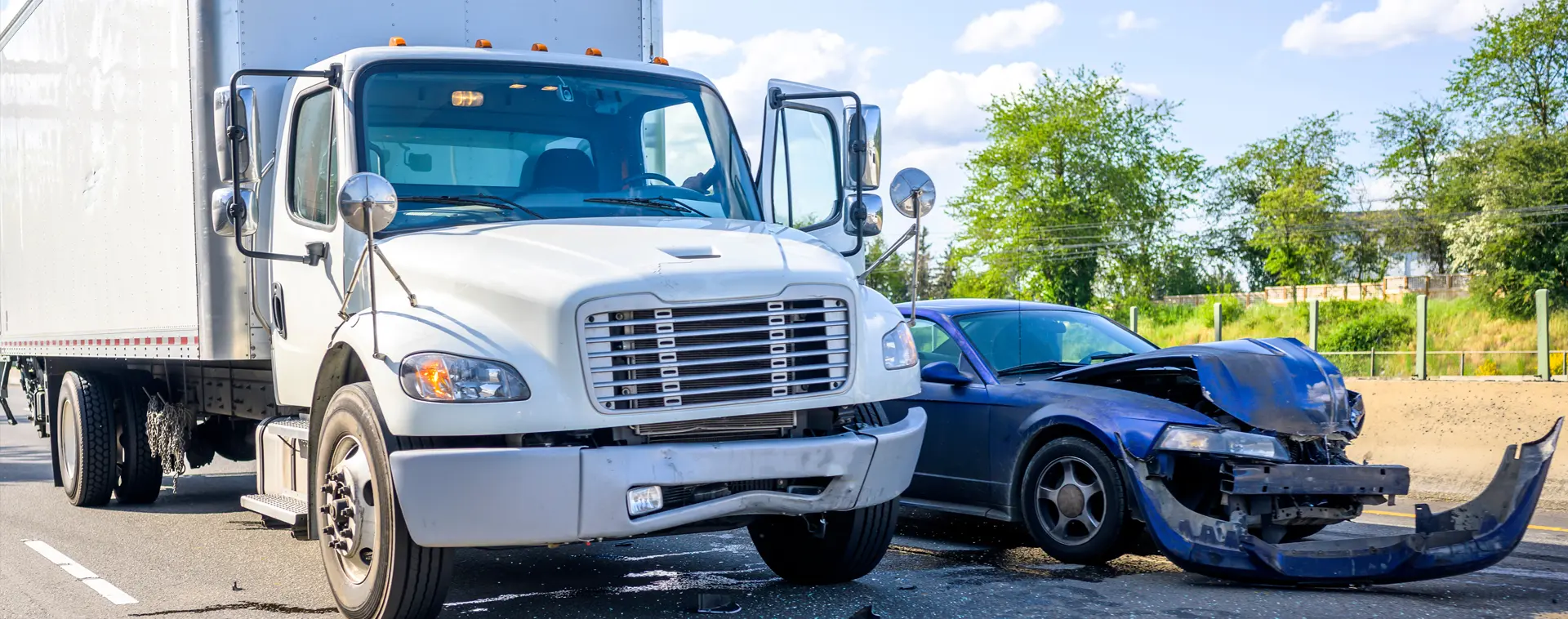
More than one company can potentially be sued after a commercial truck crash, but which ones depends on facts specific to your crash, not just the type of company involved. The companies that were actually behind the truck, the motor carrier, the trailer owner, a loader, a maintenance contractor, or a broker, are identified through records most people do not think to look for.
How to Find Out Which Companies Were Actually Behind the Truck
The truck itself usually tells you who operated it, if you know where to look. Most commercial trucks display the carrier’s name on both sides of the cab, usually on the doors, along with a carrier identification number, which may be a USDOT number or, for many California carriers, a California-issued number, and that marking is how the motor carrier running the truck identifies itself to the public. The trailer often belongs to a separate company from the one that owns or leases the tractor, so check the trailer plate and any markings on the trailer itself, since a leased trailer can point to a third business entirely.
The police report that follows a crash usually records the driver’s name, the carrier name, and the truck’s license plate and DOT number, all in one place. If the shipment involved freight being hauled for a customer, a bill of lading will often name the shipper, the carrier, and sometimes a broker who arranged the load. Once you have a USDOT number, the Federal Motor Carrier Safety Administration’s SAFER system is a free public lookup that lets you confirm which company that number is registered to and whether it matches the name on the truck.
What Actually Ties Each Company to the Crash
Once you know which companies might be involved, the next question is what actually connects each one to what happened on the road. The driver is tied to the crash simply by being the person operating the truck at the time. The motor carrier is tied to the crash through its employment or dispatch relationship with the driver, meaning records showing who the driver was working for and under whose authority the load was being hauled.
The trailer owner is tied to the crash through ownership or lease records for the trailer itself, which can be a different company from the one that owns the tractor. A loader is tied to the crash through evidence that cargo was improperly secured or unevenly distributed, such as a load that shifted or came loose. A maintenance contractor is tied to the crash through inspection or repair records showing work performed on the truck or trailer before the crash. A broker is tied to the crash through records showing it arranged the load and selected the carrier that hauled it.
Why Identifying Every Company Early Matters
Each company behind a commercial truck typically carries its own separate insurance policy, and each insurer’s only job is to protect its own policyholder. That means the motor carrier’s insurer, the trailer owner’s insurer, and any maintenance contractor’s or broker’s insurer are often working against each other from the start, each trying to show that some other company was actually responsible.
If you only identify one company, such as the driver or the carrier whose name is painted on the truck, you may never learn that a loading company or a maintenance contractor also played a role, and that company’s insurer never enters the conversation at all. Finding every company that was actually behind the truck, as early as possible, is what keeps that blame-shifting from happening without your knowledge. It also means that if one company’s insurer argues a problem was really caused by another company, such as a mechanical failure versus a loading error, you already have a way to look into both.
Wondering which insurance company will actually end up paying?
Each company behind the truck carries its own insurer, and they often spend the early weeks pointing at each other rather than at your claim.
If a Public Agency May Share Responsibility
If any government agency may share responsibility for your crash, because it owned the truck, employed the driver, or was responsible for the road where the crash happened, a claim against a public agency runs on a far shorter timetable than a claim against a private company. The same identification steps still apply, and a single crash can involve a public agency and private companies at once, so that part of a case has to be looked at early rather than last.
Deadlines Apply to Every Party You Find
Every company you identify has its own deadline for when a claim against it must be brought, and a company you have not identified yet is a deadline you do not know you are running against. That is one more reason to find every company behind the truck early.
Frequently Asked Questions
Can I sue both the truck driver and the trucking company?
In many cases, yes, both the driver and the trucking company can potentially be named, because each is tied to the crash through a different fact, the driver by being the person operating the truck and the motor carrier through its employment or dispatch relationship with that driver. Whether both actually belong in your case depends on what the records show once you identify the companies involved. An attorney can help you sort through which companies the facts actually support naming.
How do I find out who owns a commercial truck involved in an accident?
Start with what is physically on the truck, the carrier name and USDOT number or California-issued carrier number displayed on the cab doors, plus any separate markings or a plate on the trailer, since the trailer is sometimes owned by a different company than the tractor. The police report from the crash and the bill of lading, if freight was involved, often list the carrier and sometimes a broker as well. Once you have a USDOT number, the FMCSA’s SAFER system is a free public lookup you can use to confirm which company it belongs to.
What is a USDOT number and where do I find it?
A USDOT number is an identifying number commonly displayed along with the carrier’s name on the doors of a commercial truck’s cab, used to identify the motor carrier operating that vehicle. You can also often find it recorded in the police report from the crash. Once you have the number, the FMCSA’s SAFER system lets you look up which company it is registered to at no cost.
Can you sue the company that loaded the truck?
A loading company can potentially be sued when the facts tie it to the crash, most commonly through evidence that cargo was improperly secured or unevenly distributed, such as a load that shifted or came loose during the drive. That tie has to be shown through evidence specific to your crash, not assumed just because a separate company handled the loading. Whether a loader belongs in your case is something an attorney can help you evaluate once you know who the loader was.
Can a freight broker be held liable for a truck accident?
Broker liability is one of the more disputed questions in truck crash cases, and whether a broker can be held responsible depends heavily on the specific facts of what it knew and what role it played beyond arranging the load. This is not an area with a single settled answer that applies the same way in every case. If a broker’s name shows up in your crash records, it is worth raising with an attorney rather than ruling it in or out on your own.
Working out which companies were actually behind the truck that hit you is easier with help sorting through what the records show. We take these cases with no fee unless we win, and no case costs are charged if there is no recovery. Call 310-600-7881 for a free case review, or send us the details and we will call you back.