You were crossing where you always cross. The driver was looking at a phone, or turning left into a gap they thought was clear, and the first thing you knew about it was the impact. Now there are hospital bills, time off work, and an adjuster calling every other day for a recorded statement.
The question almost everybody asks first is whether it counts against them that there was no painted crosswalk. Usually it does not. California requires a driver to yield to a pedestrian in a marked crosswalk or in an unmarked one at an intersection, and an intersection has a crosswalk whether or not anyone has painted lines on it. A great many people who believe they were jaywalking were standing in a crosswalk the law recognizes.
Culver Legal has recovered $200 Million and counting for injured people in California. We work on contingency, we advance the costs of the case, and there is no fee unless we win. If there is no recovery, you are not charged those costs either. Call (310) 600-7881 at any hour.
Every Intersection Has a Crosswalk, Painted or Not
This is the sentence that changes the most cases, and it is written into the statute.
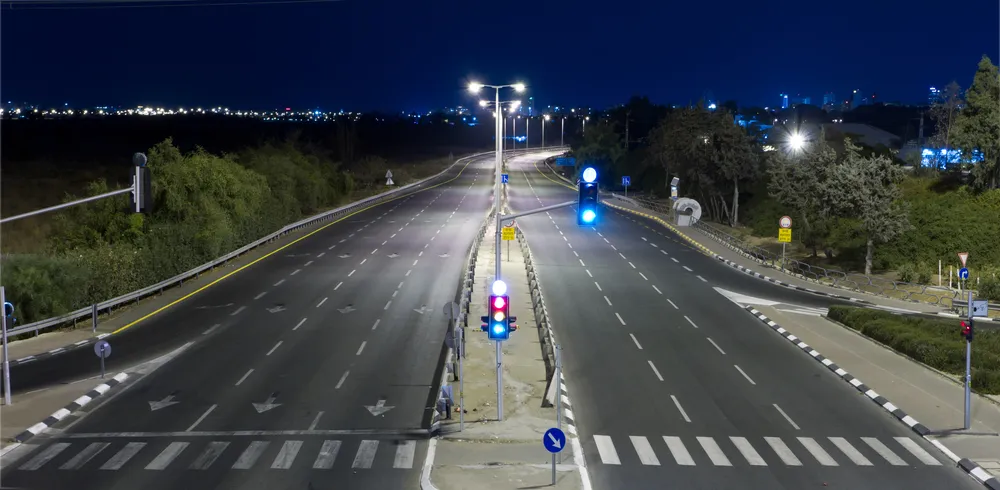
Vehicle Code 21950(a) requires the driver of a vehicle to yield the right of way to a pedestrian crossing “within any marked crosswalk or within any unmarked crosswalk at an intersection.” An unmarked crosswalk is the notional continuation of the sidewalk across the road at an intersection. No paint is required for it to exist, and the driver’s duty to yield is the same either way.
The same section goes further. Subdivision (c) requires a driver approaching a pedestrian in any crosswalk, marked or not, to “exercise all due care” and to reduce speed or take other action “as necessary to safeguard the safety of the pedestrian.” Subdivision (d) makes clear that a pedestrian’s own duty of care does not relieve the driver of that obligation.
There is a limit and it is worth knowing before an insurer raises it. Under subdivision (b) a pedestrian may not “suddenly leave a curb or other place of safety and walk or run into the path of a vehicle that is so close as to constitute an immediate hazard.” That is a real defense in a narrow set of cases. It is not a general answer to being hit in a crosswalk, and it is raised far more often than it applies.
Being Outside a Crosswalk Does Not End Your Claim
Two things are true at once here, and most pages only tell you the first.
Outside a marked or unmarked crosswalk, Vehicle Code 21954(a) does require a pedestrian to yield to vehicles “so near as to constitute an immediate hazard.” That is the part an adjuster will quote.
The part they will not quote is subdivision (b) of the same section: it “shall not relieve the driver of a vehicle from the duty to exercise due care for the safety of any pedestrian upon a roadway.” A driver who was speeding, distracted, or simply not looking does not stop being at fault because of where you were standing. What changes is the share, not the existence, of the claim.
And since 2023 the position has moved further. The Freedom to Walk Act, Assembly Bill 2147, amended both 21954 and Vehicle Code 21955 so that an officer “shall not stop a pedestrian” for crossing outside a crosswalk “unless a reasonably careful person would realize there is an immediate danger of a collision.” Crossing outside a crosswalk in California is now frequently not even grounds for a stop. If a page you read elsewhere says otherwise, it was written before January 2023 and never updated.
Told you were jaywalking, so you have no case?
An unmarked intersection is still a crosswalk, and outside one the driver still owes you due care. It costs nothing to find out which applies.

They Are Saying It Was Partly My Fault. Does That End It?
No, and in pedestrian cases this is the argument that arrives most reliably.
California is a pure comparative fault state, settled in Li v. Yellow Cab Co. (1975) 13 Cal.3d 804. A share of responsibility reduces what you recover in proportion to that share. It does not bar the claim, and there is no percentage past which the right to bring it disappears. An adjuster telling you that you were “also at fault” has told you about the size of a claim, not about whether you have one.
In pedestrian cases the argument usually arrives as one of four: that you were outside a crosswalk, that you stepped out suddenly, that you were wearing dark clothing at night, or that you were looking at a phone. Each is a question of degree, and none of them is a rule that ends a case.
Who Can Be Liable Besides the Driver
The driver is the obvious defendant and frequently not the only one, which matters because each additional defendant brings its own insurance.
An employer, where the driver was in a company vehicle or working at the time, which puts a commercial policy behind the claim rather than a personal auto policy.
A public entity, where a missing or faded crossing, a signal that was not working, an obscured sign or a badly designed intersection contributed. This route has its own clock and it is short. A written claim must be presented within six months under Government Code 911.2 before a lawsuit against that entity becomes possible.
A vehicle manufacturer, where a defect such as brake failure or unintended acceleration caused the driver to lose control.
A property owner, where an obstructed or defective sidewalk forced you into the roadway in the first place, which is a premises liability question sitting alongside the traffic one.
Where the impact caused a head injury, the medical questions run on their own track and a clear scan in an emergency room does not answer them, which is the subject of a traumatic brain injury claim. The most severe outcomes fall under catastrophic injury. Where somebody was killed, California restricts who may bring a wrongful death claim and sets separate rules for the estate.
The Evidence That Settles These Cases Is Not the Police Report
Pedestrian cases turn on where each party was and how fast the vehicle was moving, and the records that answer both belong to other people.
Signal and crossing timing. Where an intersection is involved, the agency that runs it holds the signal phasing and any maintenance history for the crossing. That record answers whether you had a walk signal and whether the crossing was working, and it is requested rather than volunteered.
Cameras that were never pointed at the road. A shop doorway, a parking structure entrance, a bus, a passing dashcam. Most of it overwrites on a loop measured in days, and nobody preserves it unless somebody asks in writing.
The vehicle’s own data. Modern cars record speed, braking and throttle in the seconds before an impact. That is frequently the only independent account of whether a driver braked at all, and it sits in a vehicle that is about to be repaired or sold.
None of that requires a lawsuit to start. It requires somebody putting the right people on notice early, which is the practical reason these calls are worth making before you feel ready to make them.
What a Pedestrian Claim Can Cover
A pedestrian struck by a vehicle has nothing between them and the impact, which is why these claims run higher than people expect and why an early offer is so often wrong.
Medical treatment already received and the care still ahead, including surgery, rehabilitation and long-term care. Wages lost while you could not work, and reduced earning capacity where an injury changes what you can do for a living. Pain, suffering and loss of enjoyment of life. Where injuries are permanent, the future cost of that care rather than its cost this year.
That last point is where a quick settlement does the most damage. An offer made before anyone knows whether an injury is permanent is priced on the assumption that it is not.
What Is a Pedestrian Accident Claim Worth?
There is no formula, and any page offering an average is describing other people’s cases.
A claim is built from medical treatment received and still ahead, wages lost, reduced earning capacity, and non-economic loss for pain, limitation and the things you can no longer do. Pedestrian injuries skew severe because nothing absorbed the impact, so more of the value usually sits in future care than in the bills that have already arrived.
How is pain and suffering calculated in California? It is not, in the arithmetic sense. California law sets no multiplier and no table, and imposes no cap in an ordinary injury claim. It is argued from evidence: how long and difficult treatment was, what you cannot do now, and the accounts of people who knew you before. Psychological injury counts on the same footing, including a lasting fear of crossing roads and a post-traumatic stress diagnosis, where somebody treating you has documented it.
How Long Does a Pedestrian Claim Take?
Months where injuries resolve and fault is clear, considerably longer where there is surgery, a permanent limitation or a disputed account of where you were standing.
The honest constraint is that a claim should not be valued until a doctor can say what the lasting effect will be. Settling before that is cheaper for the insurer and more expensive for you, which is why the first offer arrives so quickly.
Where a public entity is involved, the six-month written claim still has to be presented on time regardless of how long the rest of the case takes. Those two clocks run independently.
What Does It Cost to Hire a Lawyer, and What Comes Out of a Settlement?
Nothing up front. California personal injury work is done on contingency, so there is no fee unless we win.
The terms are set out in a written fee agreement before any work begins, and California requires contingency fee agreements to be in writing and given to the client. That document governs, not a figure quoted on a website.
What comes out of a recovery, in order: the attorney’s fee under that agreement, then the case costs the firm advanced to build the claim, such as records, filing fees and expert reports, then any medical liens where a provider or health plan has a right to be repaid. What remains goes to you.
That is why a headline settlement figure and the amount somebody actually receives are different numbers. Ask for that breakdown at the first meeting.
How Long Do I Have to File?
Two years from the date of injury, under Code of Civil Procedure 335.1.
Six months to present a written claim to a public entity under Government Code 911.2, which applies whenever a road, a signal, a crossing or a government vehicle is part of the story.
Injured children. Code of Civil Procedure 352 pauses the ordinary limitation period while an injured person is under 18. The six-month government claim deadline is not paused in the same way, which matters here because children are struck near schools and crossings more often than anywhere else.
Evidence runs out sooner than any of these. Signal timing records, nearby camera footage and the vehicle’s own data are measured in days and weeks rather than years.
Was a signal, a crossing or a road defect involved?
That puts a six-month deadline on the claim instead of two years. Worth settling in one phone call.
Where We Handle Pedestrian Cases
We take pedestrian cases across California. Where a crash happened in a market we have a page for, it is worth reading alongside this one, because the local reporting practices, courts and street layouts differ: Los Angeles, Bakersfield, Fresno, San Diego, Gardena, Riverside, Huntington Park and Long Beach.
Why Clients Choose Culver Legal
We come to you. If you are in the hospital, at home and unable to get about, or facing a long recovery, we will meet you where you are. Somebody who has just been hit by a car should not have to travel to start a claim.
Our team speaks Spanish, Farsi, Filipino, Hindi, Mandarin and Korean. Explaining your own accident in your own words is not a convenience.
The economics are simple. The firm works on contingency and advances the costs of the case, so there is nothing to pay up front and no fee unless we win, and somebody answers the phone 24 hours a day.
Pedestrian Accident FAQs
There was no painted crosswalk where I was hit. Do I still have a claim?
Very likely. California requires drivers to yield to pedestrians in unmarked crosswalks at intersections as well as marked ones, and an unmarked crosswalk is simply the line the sidewalk would take across the road. No paint is needed for it to exist. Even away from an intersection, the driver still owes you a duty of due care.
The police report says I was jaywalking. Is that the end of it?
No. A citation or an officer’s note about where you were is evidence, not a verdict, and California’s pure comparative fault rule means a share of responsibility reduces recovery rather than barring it. Since the Freedom to Walk Act took effect in 2023, an officer is not supposed to stop a pedestrian for crossing outside a crosswalk at all unless there was an immediate danger of collision.
The driver’s insurer wants a recorded statement. Should I give one?
Not before you have taken advice. That adjuster is not acting for you, and the questions are designed around the defenses in this article: where you were standing, whether you stepped out suddenly, what you were wearing, whether you were looking at your phone.
A city vehicle hit me, or a broken signal caused it. Is that different?
Yes, and the difference is urgent. A claim against a public entity has to be presented in writing within six months rather than two years, and missing that window can end an otherwise strong case.
My child was hit walking to school. How long do we have?
The ordinary two-year period is paused while an injured person is under 18. The six-month government claim deadline is not paused in the same way, so if a crossing, a signal or a school vehicle is part of what happened, that shorter clock is the one to act on.
What does it cost to have you look at it?
Nothing. The firm works on contingency and advances the costs of the case, so there is no fee unless we win. We advance the case costs, and if there is no recovery you are not charged those costs either.
I was hit in a parking lot, not on a road. Does that change things?
It changes which rules apply. The Vehicle Code sections about crosswalks govern roadways, so a collision in a private lot is analyzed on ordinary negligence and often on the property owner’s duties as well, which brings a premises claim alongside the driver’s liability.
The driver drove off and was never found. Do I have any claim?
Frequently yes, through uninsured motorist coverage on your own auto policy, which generally treats an unidentified hit-and-run driver as uninsured. It applies even though you were walking rather than driving.
My child was hit walking to or from school. Is anything different?
Two things. The ordinary two-year deadline is paused while they are under 18, and if a school district vehicle, a crossing arrangement or a road design contributed, the six-month government claim deadline is not paused and applies now.
The driver had no insurance at all. What are my options?
Your own uninsured motorist coverage is the main route, and California requires it to be included in auto bodily injury liability policies issued in this state. Check your declarations page before assuming there is nothing.
Contact a Culver Legal Pedestrian Accident Lawyer
Most people who call about being hit while walking start by explaining why it might have been their fault. Usually the law is further on their side than they think, and the facts that decide it, a signal’s timing, a camera on a nearby building, a witness nobody has asked, do not stay available for long. If you or someone in your family was struck by a vehicle anywhere in California, reach us at (310) 600-7881, at any hour. The review costs nothing.
Attorney Advertising. Prior results do not guarantee a similar outcome. Culver Legal, LLP is a California law firm. The information on this page is for general informational purposes and does not constitute legal advice.