PRACTICE AREAS
We handle all types of personal injury cases
At Culver Legal, we specialize in a wide range of personal injury cases.
ALL PRACTICE AREAS


Bicycle Accident Lawyer
LEARN MORE


Car Accidents
LEARN MORE


Catastrophic Injuries
LEARN MORE


Motorcycle Accident Lawyer
LEARN MORE


Pedestrian Accidents
LEARN MORE
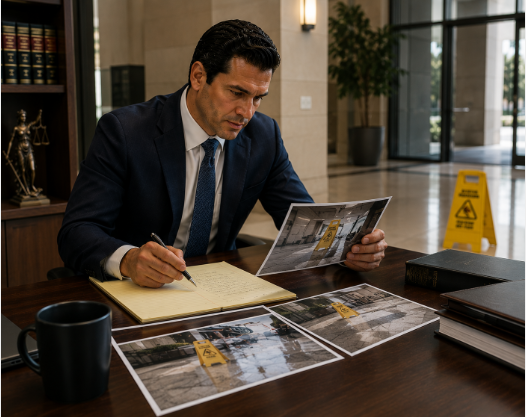

Premises Liability
LEARN MORE


Rideshare Accidents
LEARN MORE


Traumatic Brain Injuries (TBI)
LEARN MORE


Truck Accidents
LEARN MORE


Wrongful Death
LEARN MORE
NEED HELP?
Frequently Asked Questions
We believe in keeping our clients fully informed throughout every stage of the legal process, empowering them to make well-informed decisions about their cases.
California is an at-will employment state, which means employers can generally terminate without giving a reason. However, if the termination violates a statute, a public policy, an implied contract, or is connected to a protected characteristic such as race, disability, pregnancy, or retaliation for a protected activity, you may have a wrongful termination claim regardless of the at-will designation.
Filing with the California Civil Rights Department (formerly DFEH) is a mandatory step before you can sue under FEHA. The CRD investigates the complaint and either resolves it through mediation, issues a right-to-sue notice, or completes its own investigation. You need that right-to-sue notice before a court will accept your lawsuit. An attorney can request an immediate right-to-sue letter and help ensure the agency filing does not inadvertently narrow your claims.
Most employment cases in Los Angeles County are resolved in 12 to 24 months, depending on whether the case settles during mediation or proceeds to trial. Cases with strong documentary evidence and clear liability often settle earlier. Cases involving large employers with litigation teams or complex factual disputes take longer. An attorney can give you a realistic timeline after reviewing your specific circumstances.
Under California law, you are not required to use an internal complaint process before filing a FEHA claim. However, whether you reported the conduct and how the employer responded is relevant to the employer’s potential liability and to damages. An employer that failed to act after receiving a complaint faces heightened exposure. An attorney will review your situation and advise on how prior reporting affects your claim.
No. California law prohibits using immigration status as a basis to deny employment protections. Undocumented workers are entitled to the same FEHA protections as any other worker and can file wage claims with the Labor Commissioner without risk of deportation being used against them in the proceeding. Your status does not affect your right to file or your ability to recover.
For claims under California’s FEHA, you generally have three years from the date of the unlawful act to file a complaint with the California Civil Rights Department. For federal claims under Title VII, you typically have 300 days to file with the EEOC. Different claims carry different deadlines. Speak with an attorney as soon as possible to avoid losing your right to file.
Yes. Terminating an employee for filing a workers’ compensation claim is prohibited under California Labor Code Section 132a. You may have both a workers’ comp claim and a separate wrongful termination claim. Culver Legal handles both and can advise you on how to pursue each without compromising the other.
Culver Legal takes employment cases on a contingency fee basis. You pay no attorney fees unless we recover compensation for you. Your initial case evaluation is free. Call (310) 600-7881 to get started.
It depends on the terms and whether you were given adequate time to review it. California has specific requirements for valid releases of employment claims, including the Older Workers Benefit Protection Act for employees over 40. An agreement signed under duress or without proper disclosure may be unenforceable. Do not assume a severance agreement ends your options. Have an attorney review it first.
An employer’s failure to investigate or remedy a complaint after notice is itself evidence of liability. Document your complaint and the response, or lack of one. You now have a record of the employer’s knowledge of the problem. That record matters in litigation. Reach out to Culver Legal to discuss what comes next.
Independent contractors are generally not covered by FEHA. However, if your employer misclassified you as an independent contractor when you should have been an employee under California’s ABC test (established in Dynamex and codified in AB 5), you may have employment status and all the protections that come with it. Misclassification is itself a violation. An attorney can evaluate your working relationship and determine your status.
Yes. California law protects all workers regardless of immigration status. California Labor Code Section 1171.5 explicitly states that immigration status is irrelevant to civil rights enforcement and the recovery of wages and penalties under state law. Your employer cannot use your status as a defense or as leverage to avoid paying what they owe.
The California Civil Rights Department handles the administrative complaint process. Before you can sue an employer for discrimination or harassment under FEHA, you must file with the CRD and receive a right-to-sue notice. The CRD may investigate and attempt mediation. If the matter is not resolved, you take the right-to-sue notice and file your civil lawsuit in Superior Court. An attorney guides you through both stages and helps you decide when to move from administrative to litigation.
Yes. Employers routinely characterize terminations as performance-based when the real reason is discriminatory or retaliatory. The timing of the termination, prior performance reviews, how similarly situated employees were treated, and internal communications are all evidence that can contradict the stated reason. An attorney reviews the full record to determine whether the stated reason is pretextual.
Timeline varies significantly by claim type and employer response. Administrative complaints with the CRD can take several months to over a year. If the case proceeds to civil litigation, contested employment matters often take one to two years or longer. Many cases resolve through mediation or settlement before trial. An attorney gives you a realistic assessment once they review the specific facts.
As of 2025, California’s state minimum wage is $16.50 per hour for most workers. San Diego has adopted local minimum wage ordinances that apply to workers within city limits. Certain industries, including fast food, have sector-specific higher minimum wage requirements under state law. If you believe you were paid below the applicable minimum, you may have a wage claim regardless of whether your employer disputes which rate applies.
TESTIMONIALS
What Our Clients Say


Best in the city

Culver Legal helped my mother throughout the whole process.
Anastasia was AMAZING. She was very professional, genuine, caring and very nice. I highly recommend this firm!
Estoy un segura y confío mucho en esta Firma para accidentes.
Muy rápidos y eficientes. Yo los recomiendo a ellos para que les ayuden a ustedes. Gracias Culver Legal
Buenas tardes mi nombre es Edith Ayala y quiero dar las gracias a culver legal por averme ayudado con mi caso en un accidente acá en San Bruno California isieron muy buen trabajo me ayudaron con todo gracias culver legal gracias mil gracias
Excelente servicio
It was a very good experience dealing with the office members/ team of Culver Legal.
Even though it took over a year to get my settlement check, I was still very grateful for their professionalism with the whole process. I would recommend Culver Legal to anybody dealing with a car accident as well.
Got into a really bad Uber accident and didn’t know what to do.
Jonathan David Thanos and the team went above and beyond and got me a great settlement. Trust them with your car accident. A+++ service
Had a very positive experience working with Culver legal.
The attorney Micheal H. was very helpful and communicative. Lupe was also a big help. Huge thank you to the team at Culver Legal.
Culver legal.
Es lo mejor
After my bicycle accident, choosing Culver Legal was one of the best decisions I made.
From day one, Thanos Simoudis and Anastasia Gkogka treated me like a friend, not just another client. They were genuinely invested in my recovery and the outcome of my case. Their communication was exceptional—they were always responsive, kept me informed every step of the way, and were available whenever I had questions. Their knowledge, strategic thinking, and professionalism throughout the litigation process gave me complete confidence that I was in the best possible hands. What impressed me most was how thoroughly they prepared the case and how effectively they negotiated. Thanks to their expertise and dedication, we achieved 100% of our goals without even having to go to trial. That speaks volumes about their skill and reputation. If you’re looking for attorneys who are intelligent, compassionate, relentless advocates, and who truly care about their clients, I cannot recommend Thanos Simoudis, Anastasia Gkogka, and the entire team at Culver Legal highly enough. They exceeded every expectation, and I will always be grateful for everything they did for me.
Hicieron un gran servicio recomiendo.
100%
I can’t thank Culver Legal enough for everything they did after my car accident.
From day one they fought hard for my bodily injury case and made sure I was taken care of every step of the way. The whole team stayed on top of communication, handled the insurance companies, and really made me feel like they cared about getting the best outcome possible. In the end, they got me a fat settlement check that I honestly didn’t expect. If you’ve been in an accident and want lawyers that actually fight for you, I highly recommend Culver Legal!
LET'S GET CONNECTED
Get In Touch
Ready to get the compensation you deserve?
Don’t wait — the sooner you contact us, the sooner we can start fighting for you. Our consultations are always free, confidential, and available 24/7.
5670 Wilshire Blvd. Suite 1370
Los Angeles, CA 90036
info@culverlegal.com
310-600-7881