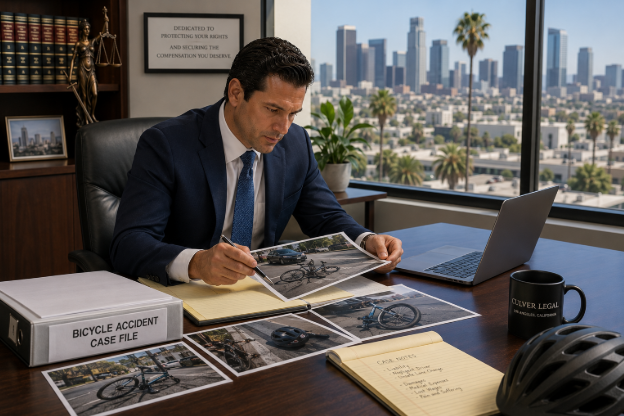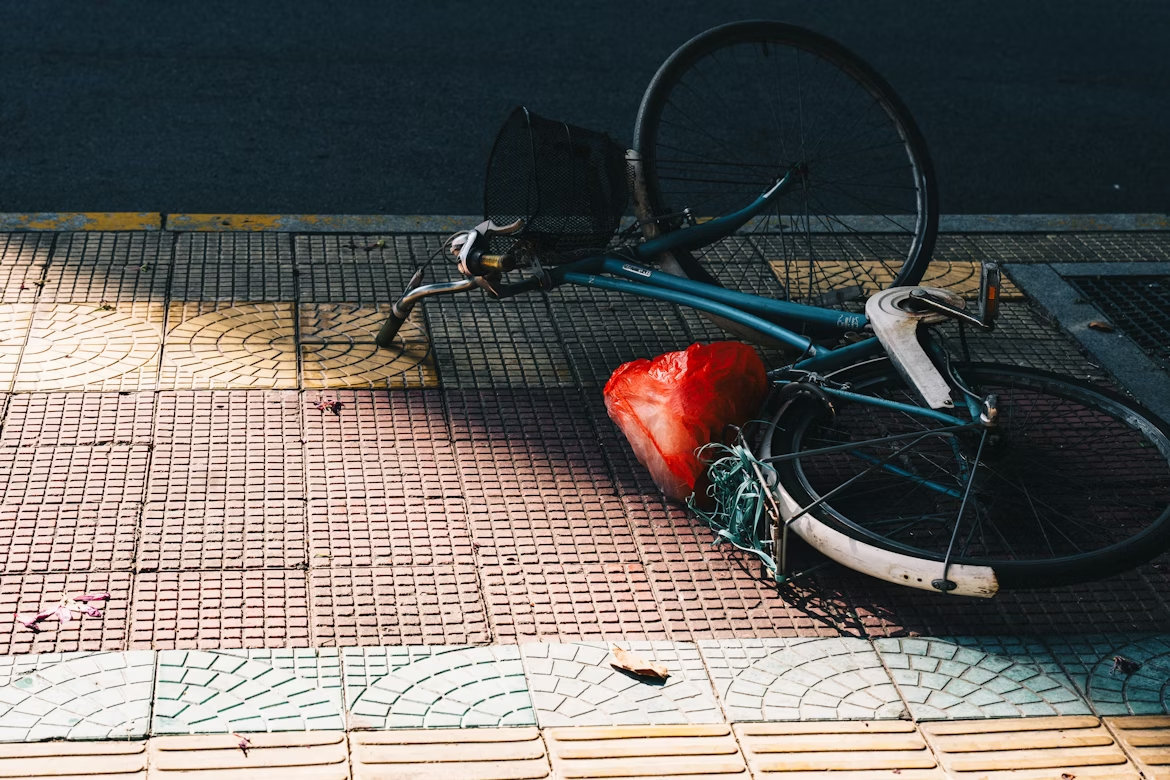
Yes, you can sue a driver who hits you while you are cycling. A cyclist injured by a driver’s negligence has the same claim a driver would have, for medical costs, lost earnings, and pain and suffering.
213 cyclists were killed or injured on Long Beach streets in 2023. Adjusted for population and traffic volume, that is second worst of the fifteen California cities with populations over 250,000. Eighteen of them were children under 15.
Culver Legal, LLP acts for injured cyclists across Long Beach on contingency, with case costs advanced. Nothing to pay up front, no fee unless we win. We advance the case costs, and if there is no recovery you are not charged those costs either. Call (310) 600-7881 at any hour.
A Cyclist Has the Same Rights as a Driver. That Is the Statute, Not an Argument
Vehicle Code 21200 provides that a person riding a bicycle on a highway has all the rights and is subject to all the provisions applicable to the driver of a vehicle, except those that by their nature cannot apply.
Both halves of that matter. It means a driver owes you the same duties they owe another car. It also means the rules apply to you, so riding against traffic or through a red light is a fault argument the other side will make. California apportions fault rather than barring recovery, so those arguments reduce a claim rather than ending it.
The Passing Law Changed in 2023, and Most Pages Still Have the Old Version
Vehicle Code 21760, the Three Feet for Safety Act, is what governs the most common serious collision here: a driver overtaking a cyclist. It now says more than most people know.
Three feet is the floor. Subdivision (c) prohibits passing at a distance of less than three feet between any part of the vehicle and any part of the bicycle or its rider.
But since January 1, 2023 the driver must change lanes. The same subdivision requires a driver overtaking a cyclist in the same lane to make a lane change into another available lane, where one exists in the same direction, with due regard for safety and traffic, if practicable and not prohibited by law. Three feet is no longer compliance when a lane change was available.
Where a lane change is not possible, subdivision (d) requires the driver to slow to a speed that is reasonable and prudent and to pass only when doing so would not endanger the cyclist.
And the penalty steps up when somebody is hurt. A violation is normally a $35 infraction. Where a collision causes bodily injury to the cyclist and the driver is found in violation, subdivision (e)(2) imposes a $220 fine.
A traffic fine is not what compensates you. Its importance is evidential: a driver cited under this section has been found to have broken a specific safety rule written to protect you, and that is a different conversation with an insurer than a general dispute about carelessness.
Hit by a driver who was overtaking you?
Since 2023 the driver has to change lanes where one is available, not just leave three feet. That distinction is worth establishing early.
Dooring Is a Separate Rule, and It Is on the Person Who Opened the Door
Being struck by a car door is one of the most common ways cyclists are seriously hurt, and people assume it falls into a grey area. It does not.
Vehicle Code 22517 provides that no person shall open the door of a vehicle on the side available to moving traffic unless it is reasonably safe to do so and can be done without interfering with traffic, and shall not leave a door open on that side for longer than necessary to load or unload passengers.
The duty sits with the person opening the door, and it is not satisfied by not having seen you.
Helmets: What California Actually Requires
Under 18, a helmet is required. Vehicle Code 21212 requires anyone under 18 riding on a street, bikeway or public bike path to wear a properly fitted and fastened helmet meeting ASTM or CPSC standards. It also covers a child riding in a bicycle seat or a towed trailer.
Over 18, California requires no helmet at all. There is no adult bicycle helmet law in this state.
That matters because insurers argue it as though there were. Where an adult cyclist was not wearing a helmet, the other side may still argue the injuries would have been less severe, but they are arguing about a choice the law leaves to you rather than about a rule you broke. Even for a rider under 18, the section makes a violation an infraction with a maximum $25 fine, dismissible on a first offense, and being cited under it is not the same as being at fault for the collision.
If a Child Was Hurt, One Deadline Does Not Pause
Eighteen cyclists under 15 were killed or injured in Long Beach in 2023, which again places the city second worst in that group of fifteen.
For an ordinary claim, a child’s deadline is paused. Under Code of Civil Procedure 352, the time a person is under 18 does not count toward the limitation period.
That pause expressly does not apply to a claim against a public entity. So where a child was hurt by a city vehicle, or by a dangerous condition of a public road or bike path, the six-month written claim deadline under Government Code 911.2 runs from the incident regardless of the child’s age. Where the City of Long Beach is the entity concerned, that claim is filed with the City Clerk, 411 West Ocean Blvd.
If that six months has already passed for a child, ask anyway. Under Government Code 911.4 a written application can be made for permission to present a late claim, within a year of the claim arising, and under Government Code 911.6 the board shall grant it on any of several grounds, including that the injured person was a minor during the claim period. That is not a reason to wait, and it is not automatic, but it means a missed deadline is a question to ask rather than an answer to accept.
How Long Do You Have?
Two years from the date of injury under Code of Civil Procedure 335.1. Six months for a written claim if a public entity is involved, with any other claim, including damage to real property, on a one-year clock. Separately, Government Code 945.4 bars a lawsuit for money damages until that claim has been presented and the entity has either acted on it or is treated as having rejected it. A claim the entity simply ignores is deemed rejected once the 45 days are up, which is what allows the lawsuit to proceed.
And presenting the claim is not the last deadline. Once the entity mails or delivers a written rejection, Government Code 945.6 gives you six months from the date of that notice to file suit. If the entity never sends a written rejection, the period is two years from when the cause of action accrued instead. A claim that is ignored therefore leaves more time than one that is formally rejected, which is the opposite of what most people expect.
Getting the Collision Report
For a collision on a Long Beach street the report comes from the Long Beach Police Department, through its Collision Investigation Detail. The fee is $29, non-refundable, per application. The Records Division is on 562-570-7381. Collision reports are not released through the Public Records Act process, so a PRA request costs weeks and produces nothing.
Where Would the Case Be Heard?
At the Governor George Deukmejian Courthouse, 275 Magnolia. Since October 2022 the Los Angeles Superior Court has assigned newly filed personal injury cases to the judicial district where the incident arose, so a Long Beach collision is heard in Long Beach. A claim seeking more than $35,000 is an unlimited civil case.
MemorialCare Long Beach Medical Center is a Level II trauma center.
Injured cycling in Long Beach?
The review costs nothing and commits you to nothing. Keep the bike unrepaired until somebody has looked at it.
Long Beach Bicycle Accident FAQs
Can you sue someone for hitting you on a bike?
Yes. A cyclist injured by a driver’s negligence has the same right to bring a claim as an injured driver would, covering medical costs, lost earnings, and pain and suffering. Vehicle Code 21200 gives a person riding a bicycle on a highway all the rights applicable to the driver of a vehicle. The claim is normally made against the driver’s auto liability insurance.
How close is a driver allowed to pass me?
No less than three feet, and since January 1, 2023 that is not the whole rule. Vehicle Code 21760 now requires a driver overtaking a cyclist in the same lane to change into another available lane where one exists and it is practicable to do so. If no lane change is possible, the driver must slow to a reasonable and prudent speed and pass only when it would not endanger you. A violation is a $35 infraction, rising to $220 where the collision causes bodily injury to the cyclist.
Do I have to wear a helmet in California?
Only if you are under 18. Vehicle Code 21212 requires a properly fitted helmet meeting ASTM or CPSC standards for anyone under 18 on a street, bikeway or public bike path, including a child in a bike seat or towed trailer. There is no adult bicycle helmet requirement in California. An insurer may still argue that a helmet would have reduced the injuries, but for an adult that is an argument about a choice, not about a broken rule.
A parked driver opened a door into me. Whose fault is that?
The person who opened the door, in almost every case. Vehicle Code 22517 prohibits opening a vehicle door on the traffic side unless it is reasonably safe to do so and it can be done without interfering with traffic, and prohibits leaving it open longer than needed to load or unload. The duty is on the person opening the door, and not having seen an approaching cyclist does not discharge it.
What if the driver says I came out of nowhere or was not visible?
That is the standard opening argument and it is not a finding. California reduces recovery in proportion to your share of the blame rather than barring it, so even where a rider carries some responsibility the claim survives. What usually answers it is physical evidence: damage patterns, the resting positions, sight lines, lighting, and any nearby camera footage, which is often overwritten within days.
What should I do straight after a collision?
Get medical attention even if you feel able to ride away, because head and internal injuries commonly declare themselves later and a gap in treatment is the argument an insurer builds on. Do not repair the bike, since the damage is physical evidence of the forces involved. Photograph the road, the vehicle and its position. Get the driver’s insurance details rather than relying on an apology at the scene. And do not give a recorded statement to the driver’s insurer, which you are not obliged to do.
Contact a Culver Legal Long Beach Bicycle Accident Lawyer
Long Beach ranks second worst among California’s fifteen largest cities for cyclist casualties. If a driver passed you too closely, opened a door into you, or a public road defect was involved, the rules that decide the claim are specific and so are the deadlines. Call (310) 600-7881 at any hour. The review costs nothing.
Attorney Advertising. Prior results do not guarantee a similar outcome. Culver Legal, LLP is a California law firm. The information on this page is for general informational purposes and does not constitute legal advice.