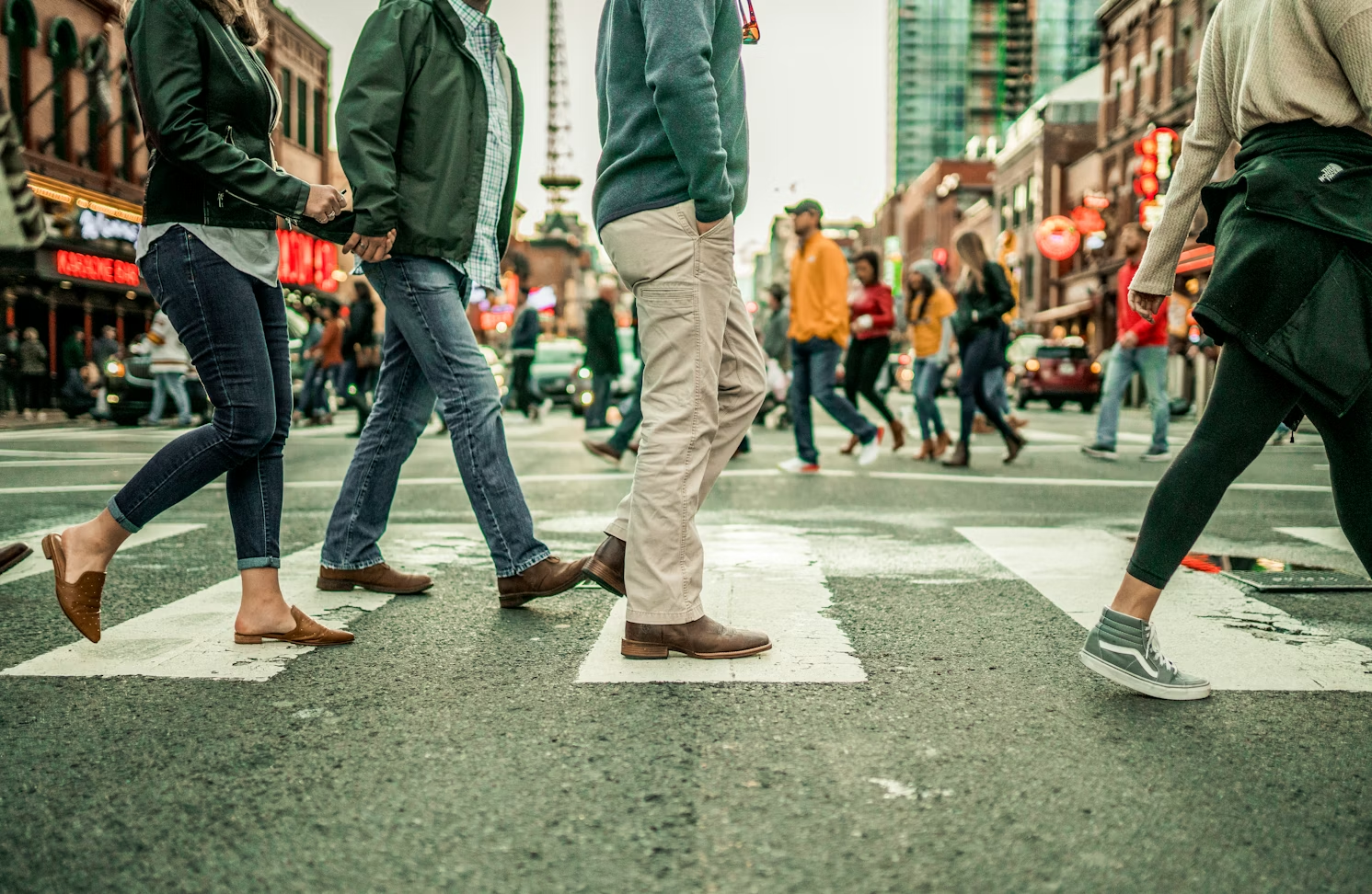
339 pedestrians were killed or injured on Long Beach streets in 2023. Adjusted for population and traffic volume, that is second worst of the fifteen California cities with populations over 250,000.
One figure inside that is worse. Thirty of them were children under 15, and thirty-three were the year before. In both years Long Beach ranked first, meaning worst, of those fifteen cities. On that measure no large California city is more dangerous for children on foot.
Culver Legal, LLP acts for injured pedestrians and their families across Long Beach on contingency, with case costs advanced. Nothing to pay up front, no fee unless we win. We advance the case costs, and if there is no recovery you are not charged those costs either. Call (310) 600-7881 at any hour.
If Your Child Was Hit, Read This Part First
There is a rule here that ends claims, and it does the opposite of what almost everyone assumes.
For an ordinary claim, a child’s deadline is paused. Under Code of Civil Procedure 352, the time a person is under 18 does not count toward the limitation period. So a child injured at eight does not lose the claim at ten.
That pause does not apply to a claim against a public entity. Subdivision (b) says so directly: the tolling does not apply where a claim has to be presented under the Government Claims Act. So if your child was hit by a city vehicle, or at a crossing that was dangerously designed or maintained, or by a public employee working at the time, the six-month written claim deadline under Government Code 911.2 runs anyway, and it runs from the incident rather than from the child’s eighteenth birthday.
In Long Beach that claim is filed with the City Clerk, 411 West Ocean Blvd.
Given that this city has the worst record of any large California city for child pedestrian casualties, that combination is the single most consequential thing on this page. A family who waits because they were told a child’s claim is protected can lose it on procedure without ever reaching the merits.
If that six months has already passed for a child, ask anyway. Under Government Code 911.4 a written application can be made for permission to present a late claim, within a year of the claim arising, and under Government Code 911.6 the board shall grant it on any of several grounds, including that the injured person was a minor during the claim period. It is not automatic and it is not a reason to wait, but it means a missed deadline is a question to ask rather than an answer to accept.
Two further grounds matter here and are easy to miss, because they are the ones most people actually fall under. Government Code 911.6(b) also requires the application to be granted where the injured person was a minor for any part of the six months, or was physically or mentally incapacitated for any part of it, provided the application is made within six months of them turning eighteen or of the incapacity ending, or a year after the claim accrued, whichever comes first.
Was a crossing, signal or public vehicle involved?
Then the six-month deadline runs, even for a child. One conversation establishes whether it applies.
What the Crosswalk Law Actually Says
Vehicle Code 21950 is the section that decides most of these claims, and three parts of it are routinely misstated in both directions.
A crosswalk does not have to be painted. Subdivision (a) requires a driver to yield to a pedestrian crossing within any marked crosswalk or within any unmarked crosswalk at an intersection. Most intersections have legal crosswalks whether or not anyone has painted lines on them, and insurers rely on people not knowing this.
The driver’s duty is more than yielding. Subdivision (c) requires a driver approaching a pedestrian in any crosswalk, marked or unmarked, to exercise all due care and to reduce speed or take other action as necessary to safeguard that pedestrian. Not hitting them is the floor, not the standard.
Pedestrians have duties too, and they are narrower than claimed. Subdivision (b) requires due care and prohibits suddenly leaving a curb into the path of a vehicle so close as to be an immediate hazard. That is a real limit. But subdivision (d) states that it does not relieve the driver of the duty of due care toward a pedestrian in a crosswalk. Both duties exist at once, which is exactly why these cases turn on apportionment rather than on a single answer.
And since 2023, being stopped is harder. Subdivision (e), added by AB 2147, provides that an officer shall not stop a pedestrian for a violation of this section unless a reasonably careful person would realize there is an immediate danger of a collision. It does not change anyone’s civil duty of care, but it does mean the absence of a citation says less than it used to.
Being Blamed Is the Norm, Not a Sign You Did Something Wrong
Almost every pedestrian claim opens with the insurer suggesting the pedestrian stepped out, wore dark clothing, was distracted, or crossed outside a crosswalk.
California apportions fault rather than assigning it. A pedestrian found 25 percent responsible still recovers 75 percent. On a serious injury those percentages are worth a great deal, which is why the argument is made early and made confidently.
What tends to answer it is evidence that disappears quickly: signal timing, sight lines, vehicle speed, whether the crossing was lit, and camera footage from nearby businesses that is usually overwritten within days or weeks.
How Long Do You Have?
Two years from the date of injury under Code of Civil Procedure 335.1.
Six months if a public entity is involved, under Government Code 911.2, for presenting a written claim. Separately, Government Code 945.4 bars a lawsuit for money damages until that claim has been presented and the entity has either acted on it or is treated as having rejected it. A claim the entity simply ignores is deemed rejected once the 45 days are up, which is what allows the lawsuit to proceed. The city states that death, injury to a person and damage to personal property are on the six-month clock, and that any other claim, including damage to real property, has one year.
And presenting the claim is not the last deadline. Once the entity mails or delivers a written rejection, Government Code 945.6 gives you six months from the date of that notice to file suit. If the entity never sends a written rejection, the period is two years from when the cause of action accrued instead. A claim that is ignored therefore leaves more time than one that is formally rejected, which is the opposite of what most people expect.
Getting the Collision Report
For a collision on a Long Beach street the report comes from the Long Beach Police Department, through its Collision Investigation Detail. The fee is $29, non-refundable, per application. The Records Division is on 562-570-7381. Collision reports are not released through the Public Records Act process, so a PRA request costs weeks and produces nothing.
Where Would the Case Be Heard?
At the Governor George Deukmejian Courthouse, 275 Magnolia. Since October 2022 the Los Angeles Superior Court has assigned newly filed personal injury cases to the judicial district where the incident arose, so a Long Beach collision is heard in Long Beach, before a jury drawn from here. A claim seeking more than $35,000 is an unlimited civil case.
MemorialCare Long Beach Medical Center is a Level II trauma center.
Hit while walking in Long Beach?
The review costs nothing and commits you to nothing. Camera footage does not wait for it.
Long Beach Pedestrian Accident FAQs
I was crossing outside a marked crosswalk. Do I still have a claim?
Very likely yes, for two reasons. First, most intersections have legal unmarked crosswalks, and Vehicle Code 21950(a) requires drivers to yield in those exactly as in painted ones. Second, even where you were genuinely outside a crosswalk, California reduces recovery by your share of the blame rather than barring it, and the driver’s own duty of due care does not disappear because of where you crossed.
My child was hit. Doesn’t a child have longer to bring a claim?
For an ordinary claim, yes: Code of Civil Procedure 352 pauses the limitation period while a child is under 18. But that pause expressly does not apply to claims against a public entity or public employee. If a city vehicle, a public employee, or a dangerous condition of public property was involved, a written claim must still be presented within six months. That is a common way a child’s claim is lost here, before anyone has looked at who was at fault. If it has been missed, there is still a route: Government Code 911.4 and 911.6 allow a written application for permission to present a late claim within a year, and the board shall grant it where the injured person was a minor during the claim period.
What if the driver says I stepped out in front of them?
That is the standard opening, and it is an argument rather than a finding. Vehicle Code 21950(b) does prohibit suddenly leaving a curb into the path of a vehicle that is too close to stop, but subdivision (d) states that this does not relieve the driver of the duty of due care, and subdivision (c) requires a driver approaching a pedestrian to reduce speed as necessary. What settles it is usually physical evidence about speed and sight lines, not the recollections of either person.
No police citation was issued. Does that hurt my claim?
Not by itself, and less than it once did. A citation is evidence but it is not the standard, and civil liability is decided on a different test from a traffic offense. Since 2023, Vehicle Code 21950(e) has also limited when an officer may stop a pedestrian for a violation of that section at all, so the absence of one says less about what happened than people assume.
What should I do in the first week?
Get medical attention and keep going back, because a gap in treatment is the argument an insurer builds its reduction around. Photograph the crossing itself, including signals, lighting and sight lines. Note which nearby businesses face the spot, since their footage is often the only objective record and is routinely overwritten within days. And do not give a recorded statement to the driver’s insurer, which you are not obliged to do.
What does it cost to ask?
Nothing. These claims are handled on contingency, so there is no fee unless we win, with case costs advanced rather than billed as they arise. Where a claim is not worth pursuing, we will tell you that.
Contact a Culver Legal Long Beach Pedestrian Accident Lawyer
Long Beach has the worst record of any large California city for child pedestrian casualties, and if a public entity was involved the deadline is six months rather than two years, even for a child. Call (310) 600-7881 at any hour. The review costs nothing.
Attorney Advertising. Prior results do not guarantee a similar outcome. Culver Legal, LLP is a California law firm. The information on this page is for general informational purposes and does not constitute legal advice.