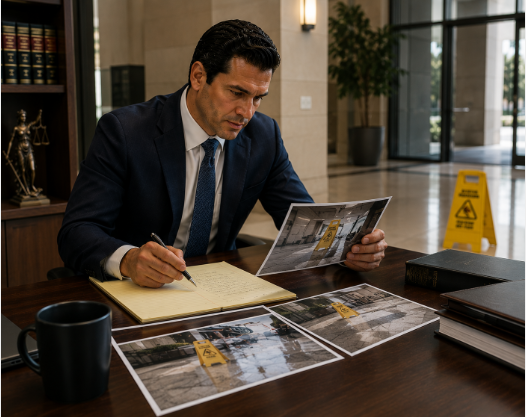
A motorcycle crash can shatter your life in seconds. If you were injured on the 405, Pacific Coast Highway, or anywhere in Long Beach, you are facing medical bills, lost wages, and an insurance company that will look for any reason to pay you less. You need a personal injury attorney who fights back hard and does not settle for what the insurer thinks your case is worth.
California roads are dangerous for riders. Drivers fail to check mirrors. Lane changes happen without signals. Intersections like Lakewood Boulevard and Willow Street see constant traffic conflicts that leave motorcyclists seriously hurt. When that happens, you need aggressive legal representation from day one.
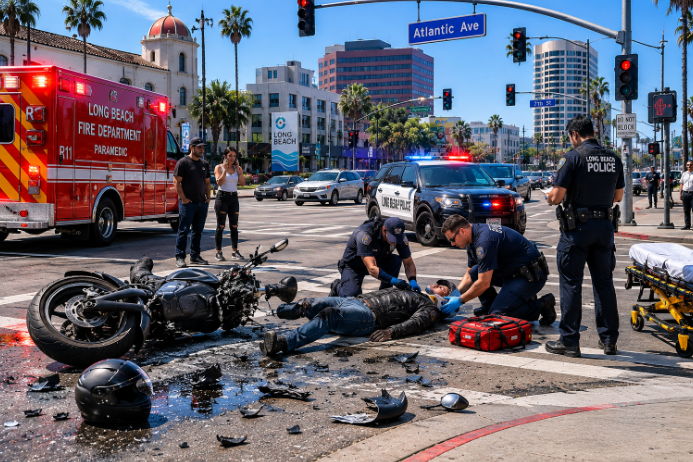
At Culver Legal, LLP, our attorneys represent injured motorcyclists across the Long Beach area. We know how insurance companies treat riders. We know how to counter their tactics. And we work on contingency, meaning you pay nothing unless we win.
Why Long Beach Riders Face Serious Risk
Long Beach is one of California’s most active urban corridors. The Port of Long Beach generates constant commercial truck traffic on the 710 Freeway and surrounding surface streets. Ocean Boulevard and Anaheim Street carry dense vehicle flow through downtown and the historic Zaferia district. Drivers frequently change lanes without checking blind spots, cutting off riders who have no barrier between them and the pavement.
According to the California Office of Traffic Safety, motorcyclists account for a disproportionate share of fatal traffic injuries compared to their presence on the road. In Los Angeles County, motorcycle fatalities have consistently represented more than ten percent of all traffic deaths. Riders are no less careful than drivers. They are simply more exposed when something goes wrong.
Common Injuries in Long Beach Motorcycle Accidents
Motorcycle accidents produce some of the most severe injuries in personal injury law. There is no steel frame protecting you. Your gear absorbs what it can, and your body absorbs the rest.
- Road rash requiring skin grafts and long-term wound care
- Traumatic brain injury, including concussion, contusion, and diffuse axonal injury
- Broken bones, including femur fractures, wrist fractures, and clavicle breaks
- Spinal cord damage causing partial or complete paralysis
- Internal organ damage from blunt impact
- Soft tissue injuries to the shoulder, knee, and hip that may not appear on early imaging
Some injuries take days or weeks to fully emerge. Do not allow an insurer to tell you that because you walked away from the scene, your injuries are minor. Get evaluated immediately and document everything.
California Laws That Apply to Your Motorcycle Accident Case
California law gives riders specific rights, and it also creates some complexity that makes motorcycle cases different from car accident claims.
Lane splitting is legal in California. Under California Vehicle Code Section 21658.1, filtering between lanes of slower-moving traffic is permitted when done safely. If you were lane splitting at a reasonable speed and a driver opened a door or merged without looking, you still have a valid claim. Insurance companies will argue that lane splitting contributed to the crash. That is a comparative fault argument, not a case-ending fact.
Helmet law and comparative fault. California Vehicle Code 27803 requires helmet use. If you were not wearing a helmet, the insurer will attempt to reduce your compensation for head and brain injuries under comparative fault principles. This applies only to head and brain injury claims. It does not affect your ability to recover from broken limbs, spinal injuries, or other harm. Our attorneys have handled cases where riders were not wearing helmets and still recovered significant compensation.
California is a pure comparative fault state. Even if an adjuster says you were partially at fault, that does not end your case. If your case is worth $500,000 and you are found 30% at fault, you still recover $350,000. You can file a claim even if you are found 99% at fault. Fault percentages reduce recovery. They do not eliminate it.
Statute of limitations. Under California Code of Civil Procedure Section 335.1, you have two years from the date of injury to file a personal injury lawsuit. Missing this deadline almost always means losing your right to recover. Government entity claims trigger a six-month administrative deadline. Call before time runs out.
Uninsured and underinsured motorist coverage. California Insurance Code requires insurers to offer UM/UIM coverage. If the driver who hit you had no insurance or inadequate coverage, your own UM/UIM policy may cover your losses. Hit-and-run accidents may also qualify under UM coverage. Even a claim against your own insurer can be disputed, which is why legal representation matters in every motorcycle accident case.
If you want a deeper look at how California law governs all types of motorcycle injury claims, our motorcycle accident practice page covers the legal framework in detail.
Why Motorcycle Accident Cases Are Legally Complex
Motorcycle claims are not simple. Several factors make them harder to resolve than standard car accident cases, and insurance companies know it.
Insurer bias against riders. Adjusters often approach motorcycle claims with an assumption that the rider was driving recklessly or taking unnecessary risks. This bias shows up in initial settlement offers that are far below what the injuries warrant. Our attorneys push back aggressively against rider stereotyping and document the full picture of how the crash happened.
Disputed fault under comparative negligence. Because lane splitting is legal but contested, and because riders often have higher speeds than surrounding traffic, insurers will build a comparative fault argument even in cases where the driver was clearly at fault. We investigate the scene, retrieve traffic camera footage, and work with accident reconstruction experts to establish exactly what happened.
Evidence disappears fast. Road debris gets cleared. Skid marks fade. Surveillance footage gets overwritten. The window to preserve evidence is narrow, especially in a congested area like Long Beach, ch where cleanup happens quickly after an incident. Calling an attorney early is the single most effective thing you can do to protect your case.
Serious injury valuation. Motorcycle accidents frequently result in injuries that require long-term care, surgery, rehabilitation, and, in some cases, permanent disability. Calculating the full value of these claims requires medical experts, economic analysts, and, in catastrophic cases,s a life care plan. Settling early almost always means leaving money on the table.
What to Do After a Motorcycle Accident in Long Beach
- Get medical attention immediately. Go to the emergency room or urgent care even if you feel okay. Long Beach Memorial Medical Center at 2801 Atlantic Avenue has a 24-hour emergency room. Some injuries, including internal bleeding and traumatic brain injury, do not produce obvious symptoms at the scene.
- Call the police. Make sure a report is filed. Get the report number before you leave. Do not accept an offer from the other driver to handle it privately.
- Document the scene. Photograph the road, your motorcycle, any debris, the other vehicle, your gear, and your visible injuries. Do this before anything is moved if possible.
- Preserve your motorcycle and gear. Do not repair your bike or replace your helmet before your attorney can inspect them. Both are critical evidence. Your gear, including your jacket and gloves, documents the impact point and angle of the crash.
- Get witness contact information. Bystanders on the corner of a busy Long Beach intersection may have seen everything. Their statements can be decisive.
- Notify your insurance company. Report the accident, but do not give a recorded statement or describe your injuries as minor.
- Call Culver Legal before speaking further with any insurer. One conversation with our team before you talk to an adjuster can protect everything that follows.
Expert Legal Tip from the Attorneys at Culver Legal: One of the most common mistakes we see is riders describing their injuries as “not that bad” at the scene or in the immediate aftermath. Adrenaline masks pain. TBI symptoms including headache, confusion, and nausea can appear hours later. Your statements at the scene become part of the record. Say only what you must to the police. Get medical care first and let the records speak for you.
What NOT to Do After a Motorcycle Accident
What you avoid doing matters just as much as what you do. Insurance adjusters are trained to minimize claims, and anything you say or do in the days after a crash can be used against you.
- Do not give a recorded statement to any insurance company without an attorney present. You are not legally required to do so.
- Do not say “I’m fine” or “I feel okay” to anyone at the scene, even casually. These statements appear in adjusters’ notes and are used to dispute injury severity.
- Do not accept a quick settlement offer. Early offers are designed to close your claim before the full extent of your injuries is known. Once you sign a release,se you cannot go back for more.
- Do not delay medical treatment. A gap of even a few days between the crash and your first medical visit gives insurers grounds to argue your injuries were not caused by the accident or are not serious.
- Do not post about the accident on social media. Photos, comments, and location check-ins can all be used to undermine your claim.
- Do not repair your motorcycle before your attorney reviews it. The damage pattern tells the story of the crash.
What Not to Say to Insurance Companies
Adjusters listen carefully to how you describe the accident and your condition. These specific phrases will be used against you:
- “I’m fine” or “It’s not that bad.” Injuries from motorcycle crashes frequently worsen over 24 to 72 hours as inflammation develops. You may feel functional at the scene and be unable to walk three days later.
- “I’m feeling better now.” Some injuries, including spinal disc herniations and TBI, take weeks to fully manifest. Telling an adjuster you are improving locks that statement into the record.
- Agreeing to a recorded statement. You are not required by California law to provide one to the other driver’s insurer. Recorded statements are used to find inconsistencies and limit your claim.
- “I think I was going a little fast.” Any admission about your speed or riding behavior is a comparative fault gift to the other side. Describe only what happened, not what you think might have contributed.
- Accepting any early offer. The first settlement offer is rarely the right one. Early offers rarely account for future surgeries, long-term rehabilitation, or permanent disability.
Insurance Company Tactics in Motorcycle Accident Claims
Insurance adjusters use a set of consistent strategies to reduce what they pay on motorcycle claims. Knowing them in advance changes how you respond.
Rider fault assumption. The adjuster’s first move is often to build a file around the idea that the rider was taking risks. They will ask about your speed, your lane position, whether you had been drinking, and whether you were licensed. These questions build a comparative fault argument.
Gap-in-treatment argument. If you wait even a few days before seeing a doctor, the insurer will use that gap to argue your injuries were not caused by the accident or were not serious enough to require immediate care. Establish a medical record the same day if at all possible.
Questioning your helmet status. Even if helmets are only relevant to head injury claims, adjusters may raise the issue to cast doubt on your overall credibility and decision-making.
Pushing for a quick settlement. Early offers close cases cheaply. Motorcycle injuries often require multiple surgeries, extended physical therapy, and, in serious cases,s permanent care. Signing early before that picture is complete is almost always a mistake.
Disputing future medical costs. Insurers will challenge projections for future surgery, therapy, and care. We work with medical experts who can document what your recovery will actually require.
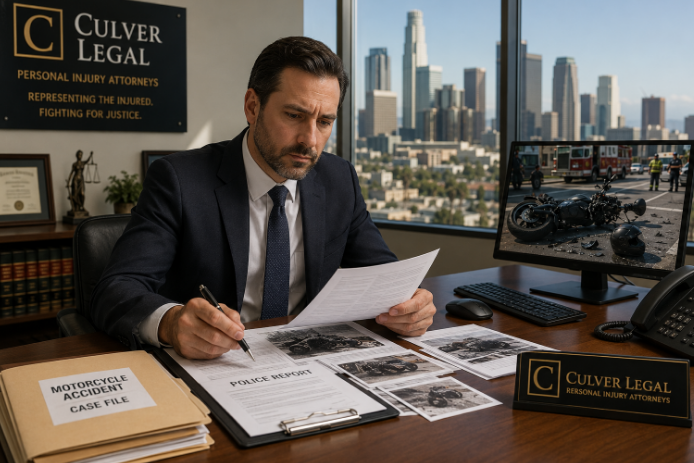
Evidence Checklist: What You Need to Support Your Motorcycle Accident Claim
- Police or California Highway Patrol accident report (or report number)
- Photographs of the crash scene, road conditions, and debris field
- Your motorcycle is in an unrepaired, post-crash condition
- Your helmet, jacket, gloves, and boots are in post-crash condition (do not clean or replace)
- Medical records from the emergency room, urgent care, and all follow-up visits
- Medical bills and treatment authorization documents
- Witness names and contact information
- Traffic camera or surveillance footage (must be requested quickly before it is overwritten)
- Photos of your visible injuries taken immediately and in the days that follow
- Proof of lost wages or lost business income
- Insurance policies for both drivers, including UM/UIM declarations page
- Any communications with the other driver or their insurer
What Can You Recover in a Long Beach Motorcycle Accident Case
California law allows injured motorcyclists to seek compensation across several categories of loss.
- Emergency room, hospital, and surgical costs
- Physical therapy and long-term rehabilitation
- Future medical expenses, including projected surgeries and ongoing care
- Lost wages from the time you could not work
- Reduced earning capacity if your injuries prevent you from returning to your previous occupation
- Property damage to your motorcycle, gear, and personal items
- Pain and suffering, both physical and emotional
- Loss of enjoyment of life
- Emotional distress
In cases where a defendant’s conduct was particularly reckless, California law permits punitive damages in addition to compensatory recovery.
Who Can File a Motorcycle Accident Claim
You do not need to be a California resident to file. You do not need documentation of immigration status. California law prohibits using immigration status against you in a personal injury case. Your right to file exists regardless of where you were born or whether you are documented. If you were injured in Long Beach, California, the law protects you.
If you were working at the time of the crash, you may have both a workers’ compensation claim and a separate civil lawsuit against the at-fault driver. These two legal tracks can run simultaneously. You do not have to choose one.
How We Build Your Motorcycle Accident Case
- Free case evaluation. We review the facts, identify the liable parties, and tell you exactly what your claim may be worth. No charge, no obligation.
- Evidence collection and investigation. We move immediately to secure traffic camera footage, hire accident reconstruction experts, and preserve your motorcycle and gear before evidence is lost or degraded. In Long Beach, where city cleanup crews move fast, this step cannot wait.
- Damage documentation with medical providers and experts. We work with your treating physicians and, when necessary, bring in independent medical experts to document the full extent of your injuries and your projected future care needs.
- Insurance negotiations. We deal with all insurers directly. You do not take calls. You do not give statements. We present your complete claim and negotiate from a position of documented strength.
- Litigation and trial preparation, if needed. If the insurer refuses to make a fair offer, we file suit and take the case to trial. Our attorneys are trial-ready, and the insurance companies know it. That reputation changes how seriously they negotiate.
What to Bring to Your First Consultation
You do not need to have everything organized before calling. Our team can help gather records. The most important step is reaching out early to protect your options.
If you have them available, bring:
- Medical records and bills from any treatment so far
- The police or incident report, rt, or the report number
- Photos of the scene, your bike, your gear, and your injuries
- Insurance information for both drivers
- Proof of lost income if you have missed work
Even without these items, we can get started. The earlier we are involved, the more options you have.
What to Look for When Hiring a Motorcycle Accident Lawyer
Not every personal injury firm handles motorcycle cases at the same level. Here is what to evaluate before you hire anyone.
Case-type experience. Ask whether the firm has handled motorcycle crash claims specifically, not just general car accident cases. Motorcycle cases involve different liability arguments, different evidence, and different insurer tactics. Ask how many motorcycle cases they have resolved and at what amounts.
Trial readiness. Many firms settle everything and never take a case to court. Insurers know which firms try cases and which ones do not. A firm that never goes to trial has less leverage at the negotiating table. Ask directly: Will you take my case to trial if the insurer does not make a fair offer?
Local court familiarity. The Los Angeles Superior Court handles Long Beach cases out of the Governor George Deukmejian Courthouse on Magnolia Avenue. Familiarity with local judges and procedures matters in litigation. Ask whether the firm has tried cases in Long Beach.
Communication and accessibility. After a serious crash, you need answers when you need them, not three business days later. Ask how the firm communicates with clients and who your primary contact will be throughout the case.
Fee structure. A legitimate personal injury firm works on contingency. You pay nothing unless they recover money for you. Get this in writing. Ask what percentage they take and whether litigation costs are deducted before or after the contingency fee.
Culver Legal, LLP operates on a no-fee-unless-we-win basis. Our attorneys, including Thanos Simoudis, David Merabi, Dario C. Gomez, Victoria Manesh, Michael Domingo, and Michael B. Huynh, have handled motorcycle and personal injury cases across Southern California. We are available 24/7, we offer free case evaluations, and we are bilingual in English and Spanish. Our firm has recovered over $1 billion for injured clients, including $2.25 million in a motorcycle accident case.
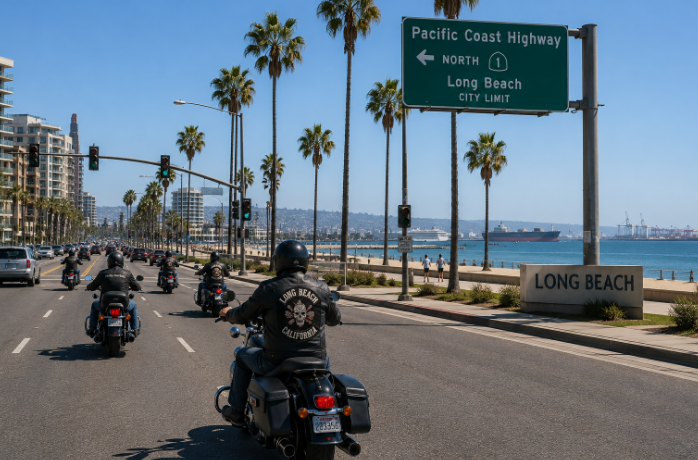
Serving Long Beach and Surrounding Communities
Culver Legal represents injured motorcyclists throughout the Long Beach area and nearby communities, including Compton, Carson, Lakewood, Signal Hill, Paramount, and Bellflower. Wherever the crash happened in the South Bay or southeast Los Angeles County, our attorneys can help.
Cases involving Long Beach streets and freeways are heard at the Governor George Deukmejian Courthouse at 275 Magnolia Avenue. Our attorneys are familiar with this courthouse and the litigation process in Long Beach Superior Court.
Other Services We Handle in Long Beach
- Car Accident Lawyer Long Beach
- Truck Accident Lawyer Long Beach
- Pedestrian Accident Lawyer Long Beach
- Bicycle Accident Lawyer Long Beach
- Slip and Fall Lawyer Long Beach
- Bus Accident Lawyer Long Beach
- Brain Injury Lawyer Long Beach
- Construction Accident Lawyer Long Beach
- Dog Bite Lawyer Long Beach
- Work Injury Lawyer Long Beach
- Employment Lawyer Long Beach
- Wrongful Death Lawyer Long Beach
- Rideshare Accident Lawyer Long Beach
Why Culver Legal
Our firm has recovered over $1 billion for injured clients across California. In motorcycle accident cases specifically, we have secured results including $2.25 million for a seriously injured rider. Our attorneys are trial-ready, bilingual in English and Spanish, available 24/7, and take every case on contingency. You pay nothing unless we win.
Named attorneys at our firm include Thanos Simoudis, David Merabi, Dario C. Gomez, Victoria Manesh, Michael Domingo, and Michael B. Huynh. When you call, you speak to someone who knows your case type and can assess your options immediately.
If you were hurt in a Long Beach motorcycle accident, call Culver Legal now for a free case evaluation. Every day you wait is a day the evidence window narrows, and the insurer builder’s file. Get Your Free Case Evaluation or call us directly at (310) 600-7881.
This content has been reviewed by the attorneys at Culver Legal, LLP, licensed to practice law in the State of California.
Attorney Advertising. Past results do not guarantee future outcomes.