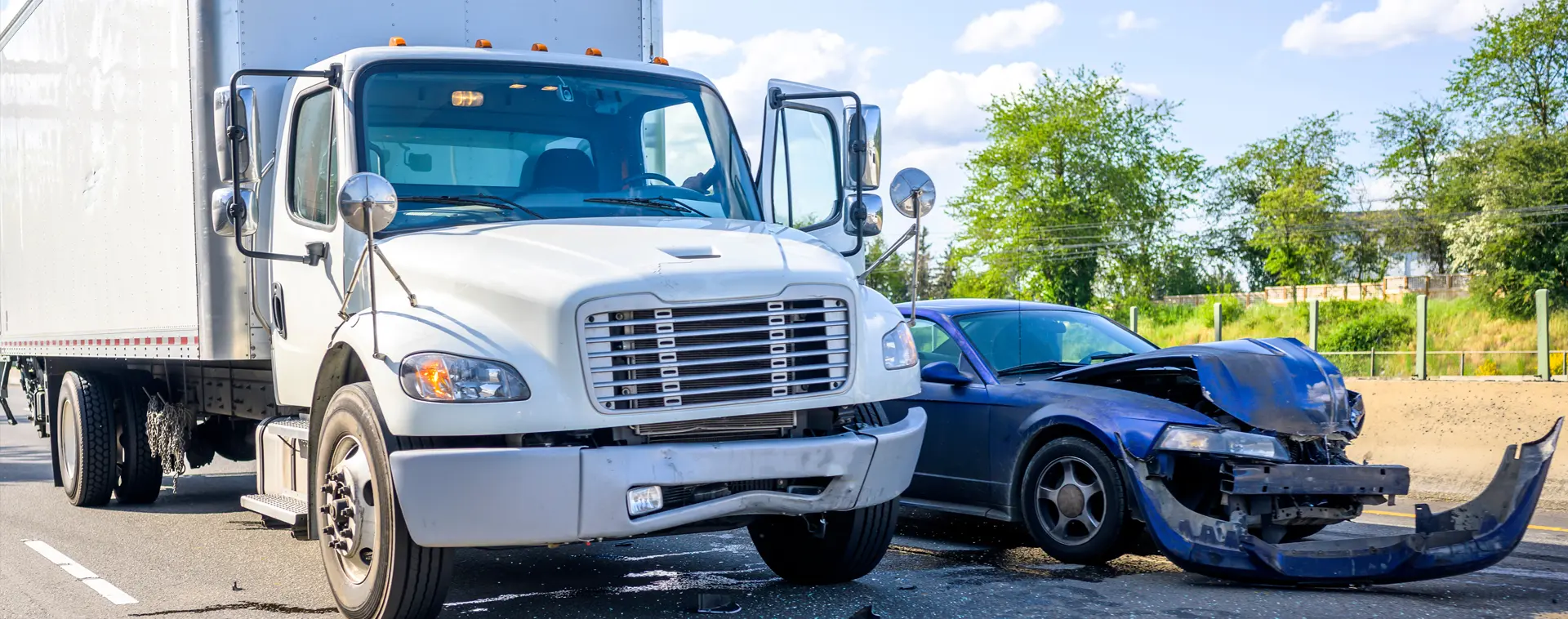
After a commercial truck crash, several kinds of evidence can be lost long before any legal deadline arrives: the truck’s own crash-data recorder can be overwritten simply by driving the truck again, camera and GPS logs run on their own short loops, and the truck and trailer themselves can be repaired, sold, or scrapped. How long each one survives varies, and it is often short enough that waiting even a short while can mean it is already gone.
The Evidence No Retention Schedule Covers
The federal retention periods for a driver’s records of duty status, the ELD back-up copy, and the driver qualification file are only one part of what can go missing after a crash. None of those three records sits inside the truck’s engine, its camera system, or its GPS unit, and none of them is the truck itself. The items below are the ones a retention schedule doesn’t track: evidence that can disappear not because a clock ran out, but because the truck went back into service, a loop of footage recorded over itself, or someone simply forgot what they saw.
Some of this evidence can be gone within the same week as the crash, before most people have thought to ask for it. The filing deadline for a personal injury claim is longer than many of these windows, which is exactly the problem: a person can still be well within time to bring a case and have already lost the camera footage, the GPS log, or the truck in its post-crash condition. Knowing what to ask for, and asking early, is what keeps the rest of the case from being built on less than it could have been.
The Engine Control Module: Driving the Truck Again Can Overwrite the Crash
A commercial truck’s engine control module, sometimes paired with a separate event data recorder, captures operating data like speed, braking, and throttle position around a hard-braking or crash-like event. That data is not stored the way a photograph is stored. The module is built to keep recording as the truck keeps running, and depending on the equipment, continuing to drive the truck can write new operating data over the exact window that matters. How much driving it takes before that happens varies by manufacturer and system, and it is often less than people expect.
This is why the single most useful thing that can happen after a serious crash is for the truck to stop being driven, not for someone to simply ask the company to save the black box data after the fact. Once the truck is back on its route, that request may arrive too late for the module to still hold anything from the crash. A formal preservation letter aimed specifically at this module, sent before the truck returns to service, is the fastest way to protect it. If the truck is already back on the road, that does not automatically mean the data is gone, so it is still worth asking rather than assuming.
Has the truck already been put back on the road?
Every mile it drives after the crash is a chance for the crash data sitting in its own module to be recorded over.
Forward and Cab Camera Footage
Many commercial trucks now run forward-facing or cab-facing dash cameras, but the footage they generate is not kept indefinitely by default. These systems typically record on a loop, continuously overwriting older footage with new footage to stay within the storage the camera has, unless an event trigger or a person manually flags and saves a clip. If nothing marks the moment of the crash as one to keep, the system has no reason to treat that stretch of road any differently from an ordinary mile of driving, and the footage can be recorded over within the camera’s normal cycle.
How long that cycle is varies by the hardware in that particular truck, and it is frequently short. A preservation letter that asks a trucking company to save camera footage from a specific date and approximate time, sent promptly, is what gives someone a chance to get the footage flagged before the loop reaches it.
GPS, Telematics, and Dispatch Messages
A truck’s location history, speed over time, and dispatch messages are usually generated and stored by a telematics provider, which is often a separate company from the trucking company itself. That matters for two reasons. First, a preservation letter sent only to the trucking company may not reach the party that actually controls the data, or controls how long it is kept. Second, telematics providers set their own retention practices, which are not public and are not uniform, so this data can age out on a schedule the trucking company does not control and may not even know about.
Dispatch messages sent through an in-cab tablet or messaging system can be just as time-limited, and are easy to overlook because they do not look like evidence the way a camera clip does. Identifying the telematics provider, not just the motor carrier, is part of what a thorough preservation request has to do.
The Truck and Trailer Themselves, Once Repaired, Salvaged, or Back on the Road
The truck and trailer involved in the crash are physical evidence in their own right. Their crush patterns, paint transfer, tire condition, lighting function, and any post-crash mechanical defect can matter as much as any document. Once the vehicle is repaired, the damage that would have shown how the crash happened is gone. Once it is sold for salvage, it can leave the trucking company’s control entirely and become difficult or impossible to locate. Once it is simply returned to service after a cosmetic fix, the version of the truck that existed at the moment of the crash no longer exists anywhere.
A trucking company’s ordinary business incentive is to get an income-producing asset back on the road, not to keep it parked for someone else’s case, so left alone, repair or resale is the default outcome, often within a short window after the crash. A request to inspect and photograph the vehicle before any of that happens has to go out early to mean anything.
The Scene, and the Businesses and Traffic Cameras Nearby
The crash scene itself is temporary. Skid marks fade or wash away in weather, debris gets swept up, and a damaged guardrail or sign gets repaired, sometimes within days. Measurements, photographs, and a scene inspection are only as good as how soon after the crash they happen.
Nearby businesses, gas stations, and the traffic cameras some cities and counties operate often have their own footage of the intersection or stretch of road, and that footage is almost always running on a short recording loop of its own, set by whoever owns the camera, not by anyone involved in the crash. A business has no reason to hold onto footage of an incident it was not part of unless someone specifically asks, and by the time a claim is filed weeks later, the relevant footage from a nearby camera has often already cycled out. Identifying and contacting these third parties quickly is often the only way to get the footage at all.
Witnesses, Who Forget Faster Than Any Document Decays
Witnesses are evidence too, and memory is not a document that sits in a drawer until someone asks for it. Details like which vehicle moved first, what a traffic signal showed, or how fast something seemed to be going start to soften and reshape within days, often without the witness realizing it is happening. A witness who is not identified and spoken to soon after the crash may still want to help later, but what they remember by then can already be a thinner, less reliable version of what they saw.
Contact information for a witness is also easy to lose. Someone who stopped to help or who was standing nearby is not going to still be there a week later, and there may be no other record that they existed at all.
What a Preservation Letter Actually Has to Name, and Who It Has to Reach
A preservation letter does one job: it puts a specific person or company on written notice not to destroy, alter, or lose specific evidence, before litigation has even begun. To do that job, it has to name the evidence precisely rather than in general terms, which in a truck crash usually means identifying the engine control module or event data recorder by the vehicle it is in, the camera system along with the date and approximate time of the footage, the telematics or GPS data for a specific trip or date range, the truck and trailer by identifying information so they can be set aside rather than repaired or sold, and any dispatch or messaging records tied to that run. A letter that only says to preserve all evidence related to the crash gives a company room to decide what counts.
The letter also has to reach the right party. The motor carrier, the driver, the truck’s owner if different from the carrier, and any third-party telematics or camera-monitoring provider can each hold a different piece of this evidence, and a letter sent to only one of them does nothing to protect what the others control.
What Happens If the Evidence Is Destroyed After the Letter Arrives
Once a preservation letter has gone out, losing the evidence it named stops being an accident with no consequence. Under California law, a judge or jury deciding the case can consider whether a party intentionally concealed or destroyed evidence, and if they decide that happened, they are allowed to infer that the missing evidence would have hurt that party’s side of the case.
Whether that inference gets drawn is up to the judge or jury, and it turns on whether the loss was intentional, not on whether a letter arrived first. California generally does not allow a separate lawsuit just for destroying evidence; the consequence instead plays out inside the underlying crash case itself, through what the judge allows the jury to consider. This is one more reason the preservation letter has to go out fast and has to be specific about what it is protecting.
Frequently Asked Questions
How long is black box data stored in a commercial truck before it’s overwritten?
There is no single answer, because it depends on the truck’s equipment and manufacturer, and the honest answer is that it varies and is often shorter than people assume. What is consistent is the mechanism: the data can be overwritten simply by the truck continuing to operate, not through any deliberate act. That is why sending a preservation letter and keeping the truck out of service matters more than any specific number of days.
Can I request black box data myself?
Informally asking a trucking company to save its own data is unlikely to carry the same weight as a formal written preservation request, since the company has little incentive to act on an informal ask and no clear record exists that the request was ever made. The module is also part of the truck itself, which is the company’s property and often outside an individual’s direct access. A specific, written preservation letter identifying the exact vehicle and module, sent promptly, is the more reliable path.
What is a spoliation letter?
A spoliation letter is another name for a preservation letter: a written notice telling a party not to destroy, alter, or lose specific evidence. It has to name the evidence precisely, such as a particular camera system and time window or a specific vehicle’s control module, and it has to reach everyone who actually controls a piece of that evidence, which can include a third-party telematics provider and not just the trucking company.
What happens if a trucking company destroys evidence after a crash?
If evidence is destroyed after a crash, California law allows the judge or jury deciding the case to consider whether the destruction was intentional and, if so, to infer that the missing evidence would have been unfavorable to the party that lost it. A preservation letter makes that much easier to show, but the inference turns on whether the loss was deliberate, not on whether a letter arrived first, so evidence that went missing before anyone wrote in is still worth raising. The consequence plays out inside the crash case itself rather than as a separate lawsuit.
Does every truck have a black box?
Most commercial trucks have some form of engine control module or event data recorder, but not all trucks carry the same equipment, and what one records can differ from what another does. Because of that, it is worth confirming what a specific truck has rather than assuming, which is part of what a preservation letter and early investigation are for.
If any of this evidence still exists, how it’s found and preserved matters as much as what it eventually shows, and that is worth a conversation with someone who has done this before. We take truck crash cases on a contingency basis, meaning there is no fee unless we win, and no case costs are charged if there is no recovery. Call 310-600-7881 for a free case review, or send us the details and we will call you back.