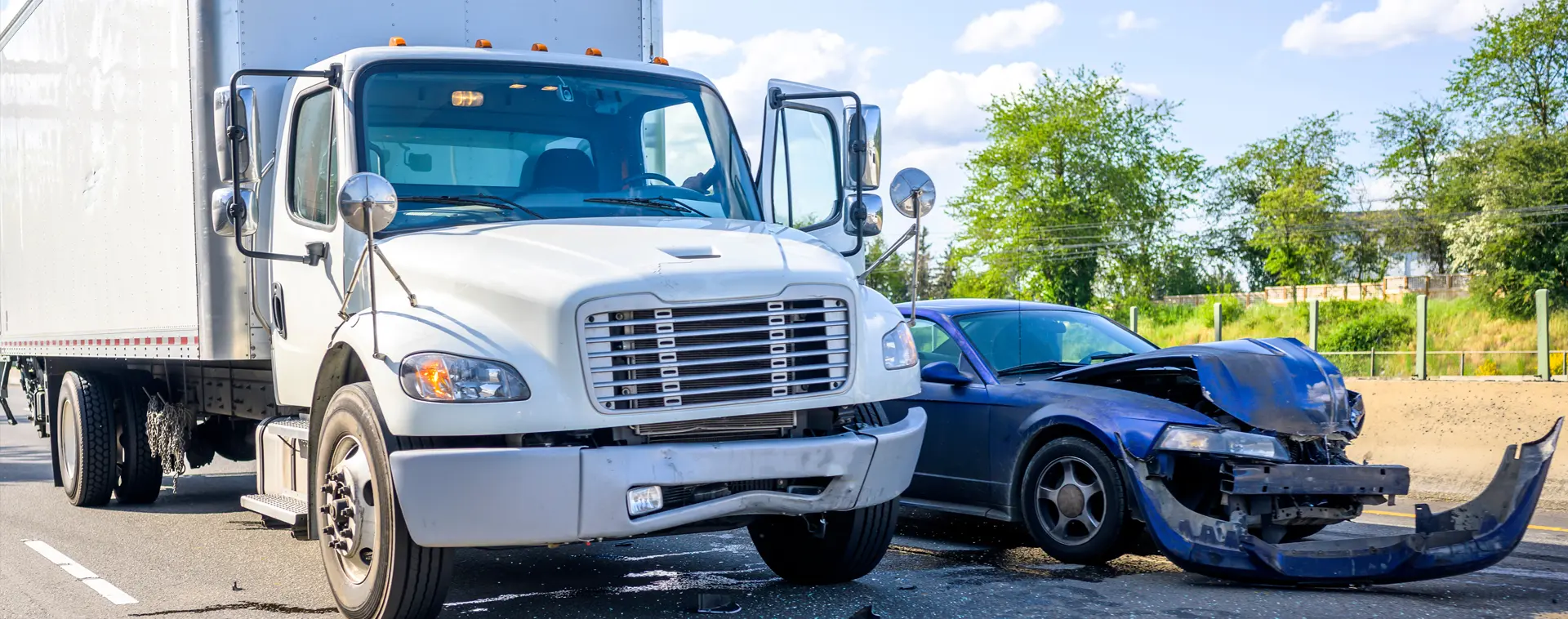
A crash with a branded delivery van can be harder to sort out than a crash with an ordinary car, because the driver in the uniform may work directly for the carrier whose name is on the van, or for a separate local delivery company under contract to it. Which one it is determines whose insurer and whose record become relevant to your claim, and the logo alone will not tell you which.
Who is liable if an Amazon delivery driver hits me?
Liability after a crash with an Amazon-branded van depends on which company actually employed the driver, not on the logo painted on the side of the vehicle. The person behind the wheel may be a direct employee of the carrier, or a worker employed by a separate, independently owned delivery company that contracts with the carrier to run certain routes. Both arrangements are common across large delivery operations, and a van can carry the same markings either way.
That matters because the employer is usually the party whose insurance responds to the claim, and whose conduct and record become relevant to it. The brand logo alone does not answer it, but a van covered by the federal motor carrier rules must display the name of the company operating it and a USDOT number on both sides, so photograph both sides of the van if you can do so safely. The only way to know for certain is to gather the specific identifying information described below, rather than assuming the brand on the vehicle is automatically the party that answers for the crash.
Are FedEx and UPS drivers employees or independent contractors?
Whether a FedEx or UPS driver is an employee or an independent contractor depends on the specific working relationship behind that particular route, not on a single rule that applies to the whole company. Large delivery brands commonly use a mix of arrangements: some drivers are direct employees, some work for a separate company that contracts to run specific routes or territories, and some operate under agreements that sit somewhere between the two.
For an injury claim, the rule that matters is a general one: a company is responsible to injured people for the negligence of its own employee or agent while carrying out the company’s business. So the practical question is not how this driver would be classified in a wage dispute, but which company the driver was working for when the crash happened.
How do I find out who a delivery driver works for after an accident?
You find out who employed a delivery driver by combining three sources: the police report, the markings and any identifying number on the van, and the information the driver is required to give you at the scene. Ask the responding officer to record the company name connected to the vehicle and driver, not just the brand visible on the outside of the van, since those are not always the same entity.
Commercial vehicles above certain size thresholds are required to display a USDOT number, and that number is tied to a specific registered carrier, which may or may not be the brand painted on the van. California law also requires every driver involved in a crash, unless physically unable, to give the other driver their name and address, driver’s license number, the registered owner’s address and proof of insurance, so ask for all of it before anyone leaves. Photograph the van’s markings, any visible number, and the driver’s paperwork if you are able to safely do so, and write down everything as soon as possible afterward, since this kind of detail is easy to lose track of once the vehicles have left the scene.
Did the police report name an employer, or just describe the van by its brand?
Many reports record only what everyone could see, the logo, and that gap can go unnoticed until a claim is already underway.
Does this van even fall under federal trucking rules?
Not necessarily. Whether federal trucking rules apply to a specific delivery van depends on that vehicle’s weight rating and how it is used, not on whether it has a company logo on it.
Federal rules define a commercial motor vehicle using four separate tests, and a vehicle only needs to meet one of them. The most commonly cited test is a gross weight of 10,001 pounds or more, but the definition also reaches smaller vehicles designed to carry more than 8 passengers for compensation, more than 15 passengers without compensation, or hazardous materials that require placarding. The weight test counts the van’s weight rating or its actual loaded weight, whichever is greater, so a van built under 10,001 pounds can still be covered on a day it is heavily loaded. California’s own truck-safety rules focus on a similarly specific list of heavier vehicles, such as multi-axle trucks over 10,000 pounds. Confirming any of this for the van that hit you requires knowing its actual weight rating and use, which is not something you can determine by looking at it.
Is Amazon responsible for accidents caused by DSP (Delivery Service Partner) drivers?
Whether a delivery brand is legally responsible for a crash caused by a driver employed by a separate company under contract to it is a contested, fact-specific question, and there is no single settled answer that applies across the board.
The analysis can touch on how much control the brand exercises over the contracted company’s drivers, how the contract is structured, and whether the worker classification rules described above are even the right lens for the question, since a brand’s responsibility for a contractor’s employee is a separate issue from how that employee is classified. These questions get worked out on the specific facts of each relationship and each crash, not from a general rule about any particular company. Identifying the direct employer, using the steps described above, is the concrete first step regardless of how the broader responsibility question eventually gets resolved.
What should I do after being hit by a delivery van?
After being hit by a delivery van, treat it like any serious crash investigation, with extra attention to pinning down exactly who employed the driver, since that fact determines who you are actually dealing with.
Get the police report and ask that it name the employer, not just the brand on the van. Photograph the van’s markings and any identifying number if it is safe to do so, and keep a record of anything the driver’s paperwork shows about the company involved. Beyond that, the standard steps for proving fault, meeting filing deadlines, and handling an insurance adjuster are the same as in any other car accident claim, and none of them change because the other vehicle had a company logo on it.
Frequently Asked Questions
Does Amazon carry insurance for delivery van accidents?
Large delivery operations typically carry commercial insurance covering their vehicles and drivers, but which policy applies to the van that hit you depends on which company actually employed that driver. If the driver worked for a separate contracted local delivery company rather than the carrier itself, a different insurer may be involved. The way to find out is the same process used to identify the employer: the police report, the van’s markings and any DOT number, and the driver’s paperwork.
Is a FedEx or UPS driver automatically an employee of the company whose logo is on the van?
No, not automatically. A driver’s status as an employee or an independent contractor depends on the specific facts of that working relationship, not on the brand painted on the vehicle. What decides your claim is which company the driver was working for at the time, not how that worker would be classified in a wage case. That determination is fact-specific and is not something a crash scene alone can answer.
What if I can’t find any DOT number or company name on the van itself?
A missing or unclear DOT number does not mean the identification is impossible, it just means you need the other two sources. The police report should still record what the driver and any paperwork identified as the employer, and the driver is required to give you their insurance and the registered owner’s details at the scene. Ask the responding officer to note this detail specifically rather than only describing the van by its brand.
Does a delivery van under 10,001 pounds automatically fall outside federal trucking rules?
Not automatically. Weight is only one of four separate ways a vehicle can qualify as a commercial motor vehicle under federal rules, the others involve passenger capacity or hazardous materials placarding. The weight test also counts the van’s actual loaded weight, not just its rating, so confirming whether federal rules apply to a specific van requires knowing its actual weight rating and use, not just its size.
Sorting out which company actually employed the driver who hit you is easier with someone who does this regularly, and talking to that person costs nothing to start. We handle these cases on a no fee unless we win basis, and we do not charge case costs if there is no recovery. Call 310-600-7881 for a free case review, or send us the details and we will call you back.