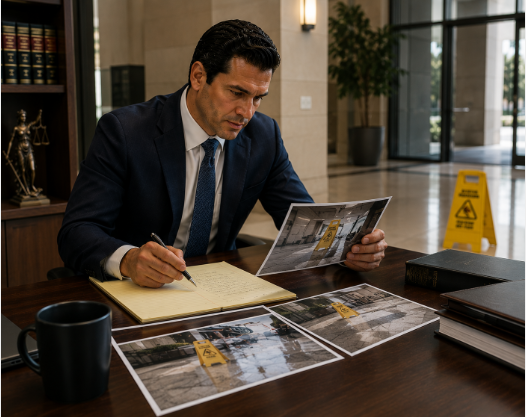
If you were injured in Texas, the clock started the day it happened. Texas gives most injury claims two years to reach a courthouse, and a claim against a city, county or transit agency can expire in a fraction of that. Culver Legal are personal injury attorneys working out of downtown Dallas, and the first call costs nothing.
Call (214) 269-1184 or get your free case evaluation online. Someone answers around the clock, in English or Spanish.
The two deadlines that decide whether you have a case at all
Most Texas injury claims run on a two-year limitations period under Texas Civil Practice and Remedies Code Section 16.003. Two years from the day the cause of action accrues, which in a crash is usually the day of the crash. Miss it and the strongest case in Dallas County is worth nothing, because the defendant does not have to argue the facts. They argue the calendar and they win.
The second deadline is the one that catches people, because almost nobody knows it exists. When the party at fault is a governmental unit, a city truck, a county road crew, a public hospital, a transit vehicle, the Texas Tort Claims Act requires written notice of the claim within six months of the incident under Section 101.101. That is notice, not a lawsuit, and it is a separate requirement that sits on top of the two years.
Home-rule cities in Texas are allowed to set their own shorter notice periods by charter, and many have. So a wreck with a municipal vehicle can carry a deadline measured in weeks rather than months, set by a charter provision most injured people will never read. If any part of what happened involves a public entity, that specific deadline needs checking immediately, not eventually.
What accrual means when the injury shows up later
A cause of action accrues when the wrongful act causes an injury, even if the full extent of that injury is not known yet. Waiting to see how bad a back injury gets before calling a lawyer is understandable and it is also how people run out of time. The safer sequence is to get the deadline pinned down first and let the medical picture develop while the claim is already protected.
How Texas divides fault, and what a percentage costs you
Texas uses proportionate responsibility, set out in Chapter 33 of the Civil Practice and Remedies Code. A jury assigns each party a percentage of responsibility, and your recovery is reduced by your share. Section 33.001 puts a hard stop on it: a claimant whose percentage of responsibility is greater than 50 percent recovers nothing.
Run the numbers on a real file. Damages come in at $200,000. You are found 20 percent responsible, so you recover $160,000. Push that to 40 percent and you recover $120,000. Push it to 51 percent and you recover zero, on the same injuries, from the same crash. That single point between 50 and 51 is worth six figures, which is exactly why the other side spends the first weeks building a story about what you did wrong.
They build it out of a recorded statement taken while you are on pain medication, a social media post about a weekend, and a gap in treatment that looks like recovery instead of a copay you could not cover. None of that is illegal. It is the job. The counterweight is a file built at the same speed from the other direction, which is what a lawyer is actually for in the first month.
The insurance that is actually available, which is rarely the first policy offered
Texas requires drivers to carry liability coverage of at least $30,000 for injury to one person, $60,000 for injuries to two or more people in one crash, and $25,000 for property damage, under Texas Transportation Code Section 601.072. Those are minimums, and a serious injury exhausts $30,000 in the emergency room.
The first offer usually comes from that minimum policy, which is why the amount of insurance available is a question worth asking before anyone signs anything. Other layers exist in a lot of files:
- Your own uninsured and underinsured motorist coverage, which applies when the at-fault driver has nothing or not enough. Texas insurers must offer it, and it can be rejected in writing, so the first step is finding out what is actually on your policy.
- Personal injury protection, which pays medical costs and some lost wages regardless of fault.
- A commercial policy behind a driver who was working at the time, which frequently carries limits an order of magnitude above a personal policy.
- A rideshare policy, where the coverage that applies depends on whether the app was off, on and waiting, or on with a passenger.
- A premises or homeowner policy where the injury happened on someone’s property.
Finding the second and third policy is usually where a claim stops being a nuisance offer and starts being a real recovery.
What we handle
Culver Legal takes injury and death claims across Texas from the Dallas office. Motor vehicle work makes up most of it: car and pickup collisions, 18-wheeler and commercial truck crashes, motorcycle wrecks, rideshare collisions, and people struck while walking or cycling. The volume behind that is not abstract. TxDOT counted 3,769 traffic deaths on Texas roads in 2025, one person killed every 2 hours and 19 minutes, alongside 244,534 people injured and a reportable crash every 59 seconds. Pedestrians accounted for 695 of those deaths and motorcyclists for 559.
Beyond the road, the practice covers premises liability where an unsafe property caused the injury, dog attacks, job site injuries, catastrophic injuries such as spinal cord damage and amputation, traumatic brain injury, and wrongful death claims brought by families. If you are unsure whether what happened to you fits, that is a reasonable question for a free consultation rather than something to work out alone.
Three Texas rules that surprise people
Texas has no dog bite statute
Most states impose strict liability on dog owners. Texas does not. Liability here runs through the rule in Marshall v. Ranne, the 1974 Texas Supreme Court decision often called the one bite rule, which means recovery generally depends on showing the owner knew the animal had bitten or shown dangerous behavior before, or that the owner was negligent in handling or containing it. That makes what the neighbors knew, what animal control has on file, and what the owner said in the first hour genuinely important evidence, and it is evidence that disappears fast.
Your employer may not carry workers’ compensation
Texas is the only state where private employers can legally decline workers’ compensation coverage. An employer that opts out is called a nonsubscriber, and it loses the immunity that workers’ compensation normally provides, which means an injured employee can sue for negligence directly. Whether your employer subscribes changes the entire shape of the claim, so it is one of the first things to establish after a job site injury rather than an afterthought.
Only certain family members can bring a wrongful death claim
Under Section 71.004 of the Civil Practice and Remedies Code, a Texas wrongful death action is for the exclusive benefit of the surviving spouse, children and parents of the person who died. Any one of them may bring it on behalf of all. Siblings cannot, however close they were. A separate survival claim belongs to the estate and covers what the person suffered before death, and the two are usually pursued together.
What happens when you call
The consultation is free and it is a conversation, not a pitch. We go through what happened, what injuries you have, what has already been said to an insurer, and what deadlines are already running. You leave that call knowing where you stand whether or not you hire anyone.
If we take the case, the early work is unglamorous and it decides most of the outcome. Securing the crash report and any camera footage before it overwrites. Identifying every policy that might respond. Getting the medical record built properly, because a treatment gap reads to an adjuster as a recovery. Taking the adjuster’s calls so you stop having to.
Fees
Culver Legal takes injury cases on a contingency fee. There is no attorney’s fee unless we recover for you, and nothing is owed up front. Case expenses, meaning court costs, filing fees, medical records, deposition transcripts and expert witnesses, are advanced by the firm and reimbursed out of the recovery. If there is no recovery, you are not billed for those expenses either.
Case results
These results were obtained by Culver Legal in California matters. They are listed because they are ours and they are real, not because they predict anything about a Texas file. Every case turns on its own facts, and past results do not guarantee a similar outcome.
- $4,000,000 for neck, back and extremity injuries
- $3,700,000 for a back and knee injury
- $3,550,000 for a lower back injury
- $3,000,000 in an auto accident
- $2,250,000 in a motorcycle accident
Who you are hiring
Culver Legal was built by founding partners Thanos Simoudis and David Merabi, both licensed to practice law in Texas, and the firm carries a 4.9 star rating across 388 client reviews. The attorneys handling injury and death claims include Dario C. Gomez, Victoria Manesh, Michael Domingo and Michael B. Huynh. Phones are answered 24 hours a day, and the firm works in English and Spanish.
The broader personal injury practice covers the full range of injury and death claims the firm handles.
Our Dallas office
Culver Legal
325 N. St. Paul Street, Suite 3100
Dallas, TX 75201
Phone: (214) 269-1184
Questions people ask
How long do I have to file a personal injury lawsuit in Texas?
Two years from the date the cause of action accrues, under Texas Civil Practice and Remedies Code Section 16.003. If a governmental unit is involved, written notice is separately required within six months under Section 101.101, and a home-rule city can require it sooner by charter. Those deadlines run whether or not you have finished treatment.
What if I was partly at fault for the accident?
You can still recover as long as your share of responsibility is 50 percent or less. Your recovery is reduced by your percentage, so being found 30 percent responsible on a $100,000 case means recovering $70,000. At 51 percent or above, Section 33.001 bars recovery entirely.
How much does a personal injury lawyer cost in Texas?
Nothing up front. Culver Legal works on a contingency fee, so the attorney’s fee is a share of what we recover and there is no fee at all if we recover nothing. Case expenses such as court costs, filing fees, medical records, deposition transcripts and experts are advanced by the firm and reimbursed from the recovery. If there is no recovery, you are not billed for them.
Should I give the insurance company a recorded statement?
Not before you have spoken to a lawyer. A recorded statement is taken early, often while you are medicated and before the full injury is known, and it is used later to argue you were partly at fault or that you were not badly hurt. You are required to cooperate with your own insurer, and that is not the same as sitting for the other side’s interview.
What is the average settlement for a personal injury case in Texas?
There is no average worth relying on, and any number quoted before a file review is marketing. Value turns on the severity of the injury, whether you can return to work, the cost of future care, your share of responsibility under Chapter 33, and how much insurance actually exists. A soft-tissue claim against a minimum policy and a catastrophic injury against a commercial insurer are not the same case.
Do I have a case if the driver who hit me had no insurance?
Often, yes, through your own uninsured or underinsured motorist coverage. Texas insurers are required to offer it and it can only be declined in writing, so the first step is pulling your own policy to see what is on it. There may also be a second responsible party, such as an employer if the driver was working.
How long does a personal injury case take in Texas?
A straightforward claim with clear liability and completed treatment can resolve in a few months. A disputed case, a serious injury still under active treatment, or a case that goes into suit runs considerably longer. Settling before treatment finishes is usually the expensive mistake, because the number has to cover care you have not received yet.
How much of a $25,000 settlement will I get?
Not the full amount. The attorney fee comes out under the contingency agreement, which states the percentage in writing before you sign. Case expenses come out, and on our files those are advanced by the firm and reimbursed from the recovery. Then medical liens are paid, meaning the providers and insurers who covered your treatment. Negotiating those liens down is real work and it changes what actually reaches you, which is why the headline number and the final number are different.
Can I still bring a claim if I do not have health insurance?
Yes. Treatment is frequently arranged on a letter of protection, where the provider is paid out of the recovery rather than up front. Going without treatment to avoid bills is what damages both your health and the claim, since untreated injuries leave no record.
What if my employer does not have workers’ compensation?
Then your employer is a nonsubscriber, which is legal in Texas and unavailable to employers anywhere else. A nonsubscriber loses the usual protections against being sued, so an injured worker can bring a negligence claim directly against the employer. Establishing which category your employer falls into is the first step after a job site injury.
What not to say to a personal injury lawyer?
Very little, honestly. The conversation is privileged, and a lawyer who does not know about the prior back injury, the gap in treatment or the beer at dinner cannot prepare for it. The facts that feel worst are the ones we most need early, because the other side will find them and the only question is whether we saw them first. Where care is genuinely needed is with the insurance company, not with us.
Do insurance companies like when you get a lawyer?
No, and that is the point. Represented claims are handled differently because the adjuster knows an unreasonable position can end up in front of a Dallas County jury. The practical change is that contact runs through us, the recorded statement stops being an option they can push for, and valuation stops being a number you are simply told.
Talk to a Texas personal injury attorney
If you were hurt in Dallas or anywhere in Texas, find out where you stand before a deadline decides it for you. Get your free case evaluation online or call Culver Legal at (214) 269-1184. Available 24 hours a day, in English and Spanish.
Attorney Advertising. The information on this page is general information about Texas law and is not legal advice. Contacting Culver Legal does not create an attorney-client relationship.