Culver Legal represents people injured by somebody else’s negligence across California. This page sets out every kind of case the firm handles and the rules that apply to all of them, and links to a fuller explanation of each.
The one thing to take from this page if you read nothing else: the ordinary deadline to bring an injury claim in California is two years, and if a city, county, transit agency or any other public body may share responsibility it drops to six months to present a written claim. That second rule catches people out constantly.
Culver Legal has recovered $200 Million and counting for injured people in California. We work on contingency, we advance the costs of the case, and there is no fee unless we win. If there is no recovery, you are not charged those costs either. Call (310) 600-7881 at any hour.
What Cases Does Culver Legal Handle?
Ten practice areas, all on the injured person’s side, all on contingency.
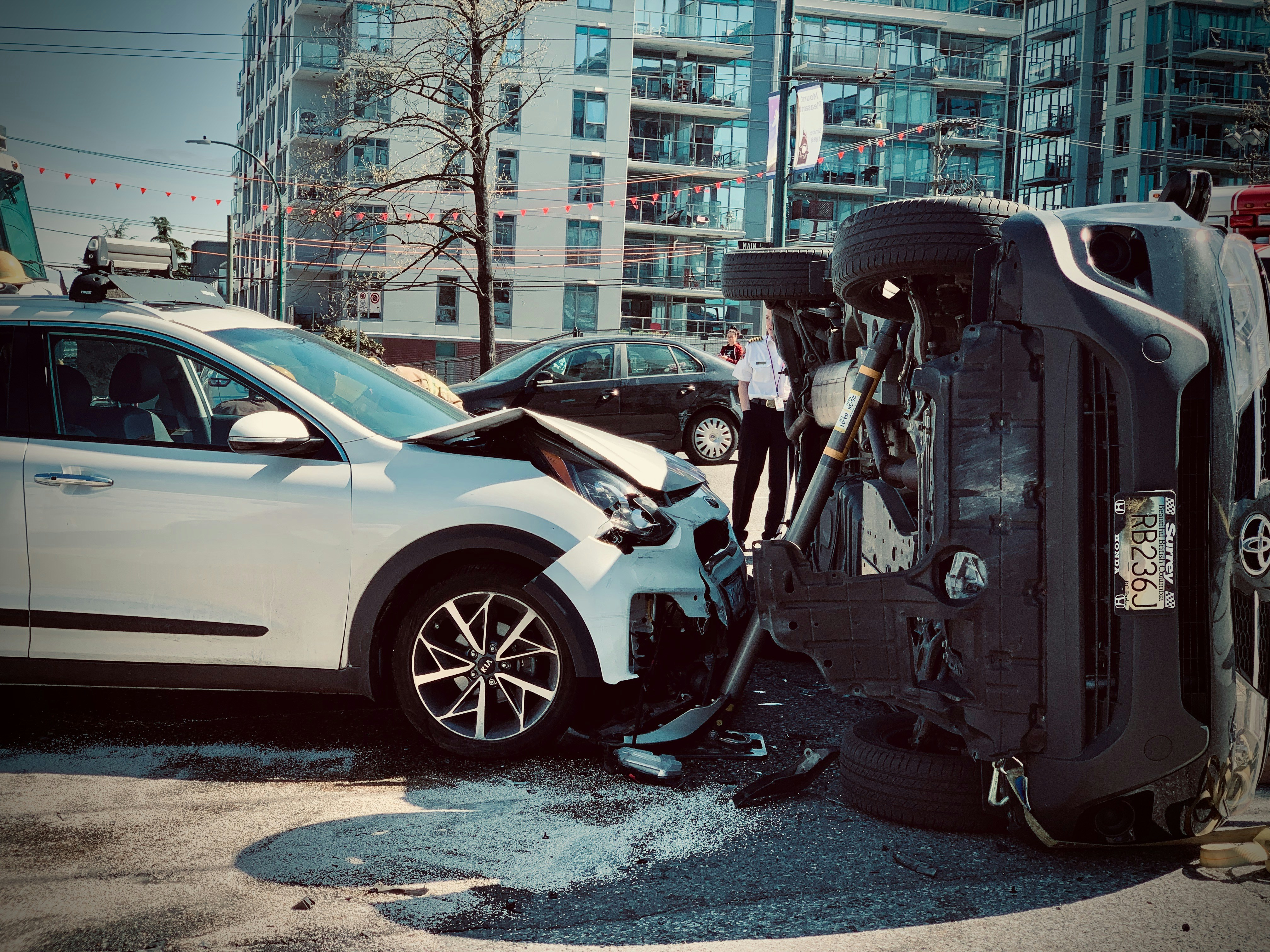
Car accidents. The most common claim we bring, and the one where the available insurance matters most. California’s minimum is $30,000 per person, so the coverage that actually pays is frequently the injured person’s own uninsured or underinsured motorist policy.
Truck accidents. A federally regulated industry with a far higher insurance floor, $750,000 for most interstate freight, and evidence the carrier may lawfully destroy after six months.
Motorcycle accidents. Where riders are blamed by default, and where the two things they are most often told wrong about are lane splitting, which is not unlawful in California, and helmets, where not wearing one does not bar a claim.
Rideshare accidents. Uber and Lyft claims, where the money available depends on what the driver’s app was doing at the moment of the crash rather than on who was at fault.
Pedestrian accidents. Where the argument is almost always about the crosswalk, and where most people do not know that an intersection has one whether or not anybody painted it.
Bicycle accidents. Where the fight is over where the rider should have been, and California law expressly allows taking the lane when it is too narrow to share.
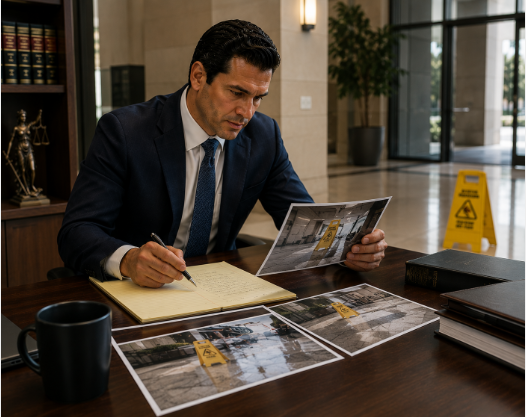
Premises liability. Injuries on somebody else’s property, decided not by whether a hazard existed but by whether the owner knew or should have known and had time to act.
Traumatic brain injury. Where a clear emergency scan is routinely mistaken for a clear brain, and where the value of the case is not known for a year or more.
Catastrophic injury. Permanent, life-changing injury, where almost all of the money is in the future and has to be proven with a life care plan rather than asserted.
Wrongful death. Where California restricts who is allowed to bring the claim, and parents of an adult child sit in the tier that must prove financial dependency.
Not sure which of these your situation is?
Most cases turn out to be more than one, and each one brings its own insurance. Tell us what happened and we will tell you.

How Long Do I Have to Bring a Claim in California?
Two years for most injury claims, six months where a public entity is involved, and both are absolute enough that missing them usually ends the case.
| Situation | Deadline | Source |
|---|---|---|
| Personal injury, ordinary defendant | 2 years from the injury | CCP 335.1 |
| Any claim against a public entity | 6 months to present a written claim | GOV 911.2 |
| Wrongful death | 2 years, generally from the date of death | CCP 335.1 |
| Injured person under 18 | Ordinary period paused until 18. The 6-month rule is not | CCP 352 |
The six-month rule reaches further than people expect. A city bus, a police or council vehicle, a pothole, a broken traffic signal, a missing crosswalk marking, a public hospital, a school district vehicle, a fall in a public park or library. If any public body might share responsibility, the clock is six months from the day it happened, under Government Code 911.2.
And the practical deadlines are shorter than any of these. Camera footage overwrites in days. A commercial carrier may destroy driver logs after six months. Vehicles get repaired and hazards get cleaned up within hours. None of that is written into a statute and all of it decides cases.
Does Being Partly at Fault Stop Me Claiming?
No. California is a pure comparative fault state, so a share of responsibility reduces what you recover in proportion and does not bar the claim.
That rule was settled in Li v. Yellow Cab Co. (1975) 13 Cal.3d 804, and there is no percentage at which the right to bring a claim disappears. An adjuster saying “you were also at fault” is arguing about the size of a claim rather than whether you have one.
What Can a Personal Injury Claim Recover?
Everything the injury has cost and will cost, in two groups.
Economic losses, which have receipts or can be calculated: medical treatment already received, the care still ahead, wages lost, reduced earning capacity where the injury changes what you can do for a living, property damage, and the cost of help at home.
Non-economic losses, which do not: pain, suffering, loss of enjoyment of life, and in some cases a spouse’s loss of consortium.
There is no formula for the second group. California law sets no multiplier and no table, and imposes no cap in an ordinary injury claim. It is argued from the evidence of what treatment involved and what you can no longer do. Psychological injury counts on the same footing as physical injury where it is documented by somebody treating you.
What Does It Cost to Hire Us, and What Comes Out of a Settlement?
Nothing up front, and no fee at all unless we win.
Personal injury work in California is done on contingency: the fee is a percentage of the recovery. That percentage is set out in a written fee agreement, which California requires to be in writing and given to the client, and it is the document that governs rather than a figure quoted on a website.
What comes out of a recovery, in order: the attorney’s fee under that agreement, then the case costs the firm advanced to build the claim, such as records, filing fees and expert reports, then any medical liens where a provider or health plan has a right to be repaid. What remains goes to you.
That is why a headline settlement figure and the amount somebody receives are different numbers. Ask for that breakdown at the first meeting, and be wary of anybody who will not give it.
Case Results
- $4,000,000Auto Accident
- $3,550,000Personal Injury
- $3,550,000Auto Accident
- $3,000,000Truck Accident
- $2,500,000Commercial Accident
- $2,250,000Motorcycle Accident
Prior results do not guarantee a similar outcome. Every case turns on its own facts.
What Should I Do After an Accident in California?
Get medical attention, say you are hurt if you are, and do not give the other side a recorded statement before taking advice.
Say you are in pain at the scene. Adrenaline convinces people they are fine for several hours, and “I’m okay” goes straight into the report and the adjuster’s file. It is also what keeps your name off the driver’s DMV report, which under Vehicle Code 16000 must name anybody who complained of bodily injury.
Photograph everything before it is moved or cleaned. Vehicles, the hazard, the scene, your injuries, and the identifying markings on any commercial vehicle.
Do not delay treatment. A gap between the accident and the first medical visit is the first thing raised to argue you were not badly hurt.
Do not accept an early offer or sign anything. The first offer is calculated against the bills that have arrived so far, which in a serious case is a fraction of the eventual cost, and a settlement is final.
Might a city, a bus or a road defect be involved?
Then the deadline is six months, not two years. That is the single most common way a good case is lost.
Where We Work
Culver Legal takes cases across California, and keeps pages for the markets where we work most often: Los Angeles, Bakersfield, Fresno, San Diego, Gardena, Long Beach, Riverside, San Francisco, Huntington Park and Orange County. A full list is on the areas we serve listing.
Where a case is in a market without its own page, it is handled exactly the same way. The pages exist because local courts, reporting practices and road networks differ, not because the firm’s reach does.
Why Clients Choose Culver Legal
We come to you. If you are in the hospital, at home and unable to travel, or working hours that make an office visit impossible, we will meet you where you are.
Our team speaks Spanish, Farsi, Filipino, Hindi, Mandarin and Korean. Explaining your own accident in your own words is not a convenience.
The economics are simple. The firm works on contingency and advances the costs of the case, so there is nothing to pay up front and no fee unless we win, and somebody answers the phone 24 hours a day.
California Personal Injury FAQs
How long do I have to file a personal injury claim in California?
Two years from the date of injury for most claims, under Code of Civil Procedure 335.1. If a public entity may be responsible, a written claim must be presented within six months under Government Code 911.2. If the injured person is under 18, the ordinary two-year period is paused until they turn 18, but the six-month government rule is not.
Do I have a case?
If somebody else’s carelessness caused you injury and the deadline has not passed, usually yes. The better questions are how much insurance can be reached and how much of the harm can be proven, which is what a free review is for.
How much is my case worth?
There is no formula and any page quoting an average is describing other people’s cases. It is built from medical costs already incurred and still to come, lost wages, reduced earning capacity, and non-economic loss for pain and limitation, then reduced by any share of fault.
Does it cost anything to talk to you?
No. The review is free, the firm works on contingency, and there is no fee unless we win. We advance the case costs, and if there is no recovery you are not charged those costs either.
They are saying it was partly my fault. Is my claim over?
No. California uses pure comparative fault, so your share reduces the recovery in proportion rather than ending the claim, and there is no cut-off percentage.
The insurance company already offered me money. Should I take it?
Not before you know what the injury will cost. An early offer is calculated against the bills received so far, and a settlement cannot be reopened when the real cost becomes clear.
Do I have to give the other insurer a recorded statement?
No. You have obligations to your own insurer under your policy. You have none to the other side’s insurer, and giving one early and unadvised is a common way to damage a good claim.
What if the person who hurt me had no insurance?
Your own uninsured motorist coverage may answer it, and California requires it to be included in auto bodily injury liability policies issued in this state. Check your declarations page.
How long will my case take?
Months if injuries resolve and fault is clear, considerably longer if there is surgery, a permanent limitation or a fault dispute, because a claim should not be valued until doctors can say what the lasting effect will be.
I am undocumented. Can I bring a claim safely?
Yes. Under Evidence Code 351.2, added by AB 2159, evidence of a person’s immigration status is not admissible in a civil action for personal injury or wrongful death, and discovery into it is not permitted either.
Talk to a Culver Legal Personal Injury Lawyer
Whatever kind of accident it was, the two things that decide it early are the deadline that applies to you and how much insurance can be reached. Both are answerable in one phone call, and both get harder to answer the longer they are left. Reach us at (310) 600-7881, at any hour. The review costs nothing and carries no obligation.
Attorney Advertising. Prior results do not guarantee a similar outcome. Culver Legal, LLP is a California law firm. The information on this page is for general informational purposes and does not constitute legal advice.