Fault in a California car accident is not decided by the police report or by an insurance adjuster. It is only fixed through a settlement both sides agree to, or through a decision by a judge, jury, or arbitrator after the evidence has been tested.
Who Actually Decides Fault: Police Report vs. Insurance Adjuster vs. Court
A police report is the responding officer’s account of what happened, not a legal determination of fault. Officers often note contributing factors and may cite a driver for a traffic violation, but neither the report nor the citation is itself a determination of fault. Under Vehicle Code 40834, a traffic conviction is not res judicata and does not decide any issue in the civil case that follows, but that does not make a conviction irrelevant: Civil Code 3333.4 turns directly on whether a DUI conviction exists, for you and for the other driver. The underlying violation still matters, but not automatically: under Evidence Code 669, a driver is presumed to have failed to use due care only if the violation proximately caused the injury, the injury was of the kind the law was designed to prevent, and the injured person was in the class of people the law was designed to protect. A citation for something that did not cause the crash does not create that presumption at all, and where the presumption does apply, it can be rebutted by showing the driver did what a reasonably prudent person desiring to comply with the law would have done in the same circumstances. That is why a citation against you is a starting point, not an ending. Under Vehicle Code 20013, the report itself cannot be introduced as evidence in the civil or criminal trial that follows, though the officer who wrote it can still testify to what they personally observed.
An insurance adjuster’s fault percentage is also not a legal finding. It is one employee’s internal assessment, built to support a settlement offer, and the two insurers involved often disagree with each other’s numbers. The only things that actually fix a fault percentage in a way that carries legal weight are a settlement both sides sign, a verdict from a judge or jury after trial, or a binding arbitration award. Everything before that point, including any number an adjuster gives you over the phone, is a negotiating position, not a ruling.
California’s Pure Comparative Fault Rule: Why Being Partly at Fault Doesn’t End Your Claim
California follows a pure comparative negligence system, established by the California Supreme Court in Li v. Yellow Cab Co. (1975). Before that decision, a plaintiff who was even slightly at fault could be barred from recovering anything under the older contributory negligence rule. Li rejected that all-or-nothing approach and replaced it with a rule that reduces a plaintiff’s damages in proportion to their own share of fault, rather than eliminating the claim entirely. That means if you contributed to the accident, whether by following too closely, being partly distracted, or misjudging a gap in traffic, you have not lost your right to recover. Your damages are reduced by your percentage of fault, but the remainder is still yours to pursue. Two situations change what that remainder can include, and neither one ends the claim. Under Civil Code 3333.4, a driver who was convicted of DUI for this crash, or who owned the uninsured vehicle involved in it, or who was driving and cannot establish financial responsibility, cannot recover non-economic damages, meaning pain and suffering. Financial responsibility is not the same as owning your own policy: under Vehicle Code 16021, a driver establishes it by being insured under any policy that covers that driver for the vehicle involved, which includes being covered as a permissive user under the vehicle owner’s policy, coverage every California auto policy must provide. Economic damages, medical bills and lost earnings, are unaffected by that rule and are still recoverable, reduced only by the percentage of fault assigned to you. And if you owned the uninsured vehicle and the driver who hit you was convicted of DUI for the same crash, Civil Code 3333.4(c) restores your right to non-economic damages in full. If an insurer has told you that being uninsured means you recover nothing, that is not what the statute says. This is the single most misunderstood part of California car accident law, and it is why an insurance company telling you that you were partly at fault is not the same as telling you that you have no claim.
How the Percentage Is Applied to Your Payout (Worked Example)
The math under pure comparative fault is a straightforward reduction. Start with the full value of your damages, then subtract your own percentage of fault from that total. Full value means two categories, not one: economic damages, which are your objectively verifiable monetary losses such as medical bills, lost income, and property damage, and non-economic damages, which are the subjective losses the law also compensates, including pain, suffering, inconvenience, physical impairment, disfigurement, and emotional distress. If you are found 25 percent at fault, the remaining 75 percent of that combined total is what you pursue from the other driver. If you are found 60 percent at fault, the same formula applies to the remaining 40 percent. This describes how the reduction works, not what any specific claim is worth, since your actual damages, the fault percentage assigned, and the other driver’s insurance coverage all vary by case. The formula is why fighting over a 10 or 20 point swing in your fault percentage matters: it applies against the entire value of your claim, not just a portion of it.
Multi-Car Accidents: How Fault Splits Among Several Drivers and What Proposition 51 Means for What You Collect
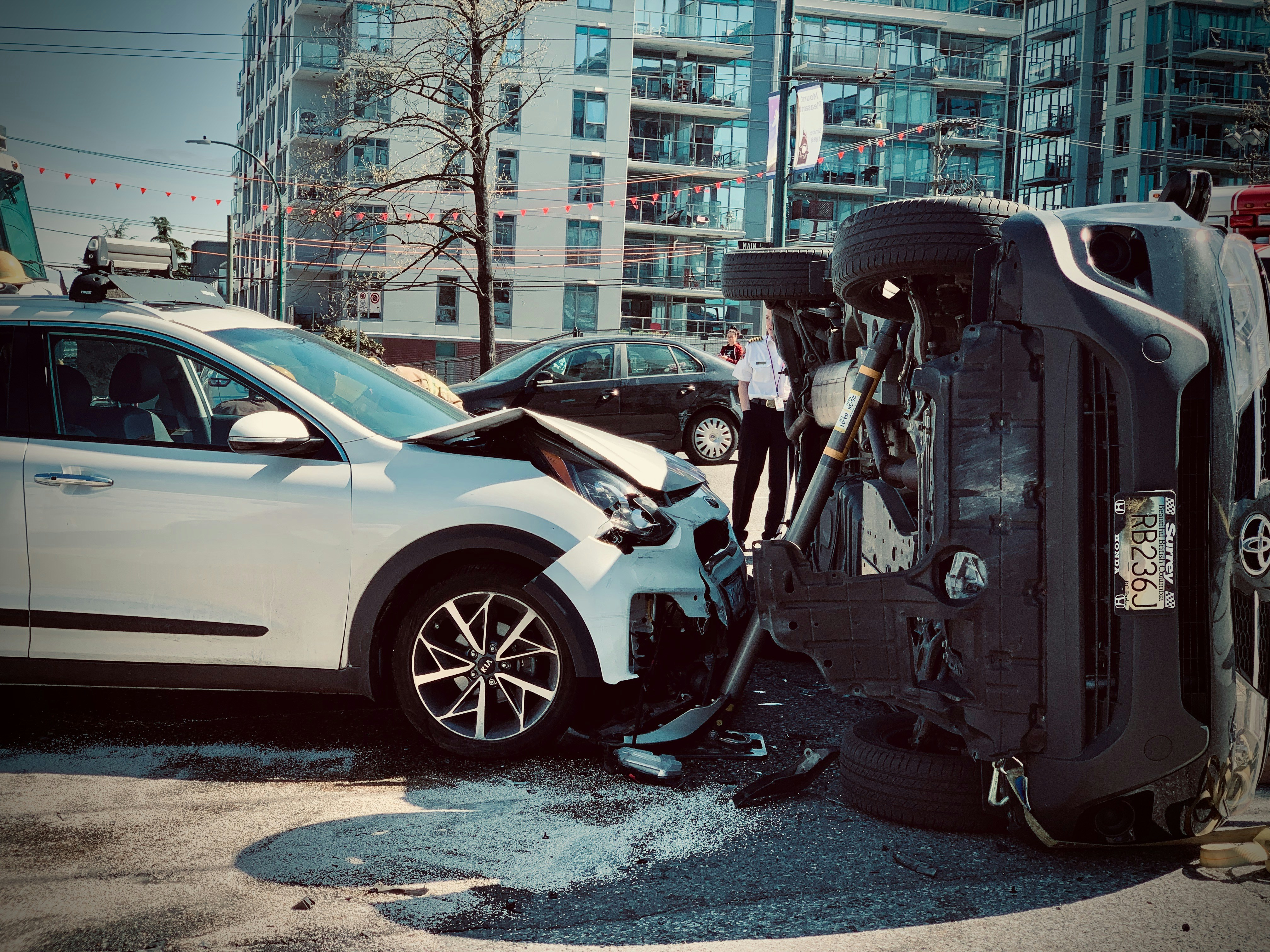
When three or more vehicles are involved, fault is not simply split down the middle. Each driver is assigned an individual percentage of fault based on their own conduct, and those percentages do not have to be even between the drivers who are not you. It is possible for one driver to be found 10 percent at fault, another 30 percent, and a third 60 percent, all in the same pileup.
What you can actually collect from each of those drivers depends on Civil Code 1431.2, added by Proposition 51. For non-economic damages, meaning pain, suffering, and similar subjective losses, each defendant is liable only for their own individual percentage share. You cannot collect a driver’s full non-economic damages from one defendant who happens to have more insurance if that defendant was only 10 percent at fault for their own conduct. One exception matters in real crashes: a defendant liable for someone else’s driving rather than their own, most often an employer whose driver was on the job, is not covered by that several-only rule and answers for that driver’s entire non-economic share. Economic damages work differently: objectively verifiable losses like medical bills and lost wages remain subject to joint and several liability, meaning one liable defendant can be held responsible for the whole economic portion of your damages rather than only their own percentage share. That whole is measured after your own percentage of fault is deducted, so if you are 25 percent at fault, a single defendant can be pursued for 75 percent of your economic damages, not 100 percent. In a multi-car crash, that distinction between what is several-only and what is still joint often decides which defendant gets pursued first.
Was the driver who caused the most damage underinsured?
Under Proposition 51, their insurer usually owes only their own percentage of your pain and suffering, not the full amount, and most people find that out too late.
Evidence That Actually Moves the Fault Percentage
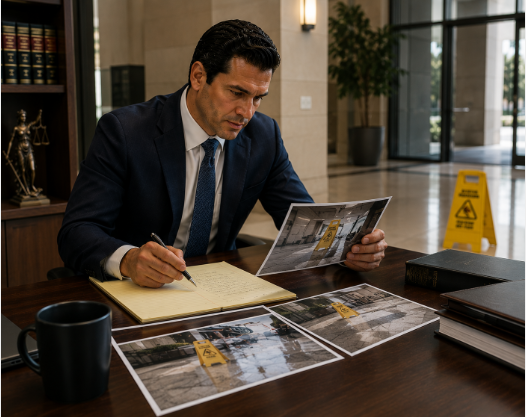
Because a fault percentage gets set through negotiation or trial, not by decree, the evidence gathered after the crash is what actually shifts the number. Photos of vehicle damage and final rest positions, dashcam or nearby business surveillance footage, independent witness statements, and the responding officer’s own testimony about what they observed (as opposed to the report itself, which cannot be used as evidence directly) all carry weight. Event data recorder information, sometimes called black box data, can help establish speed and braking just before impact. Cell phone records can help establish whether a driver was distracted. None of this evidence speaks for itself. It has to be gathered before it disappears, organized, and presented to the insurance company or the court in a way that connects it to the specific fault finding you are asking for.
What to Do If the Insurance Company Blames You
An adjuster assigning you most or all of the fault is not a final determination, it is an opening position, and it is worth treating it that way. Do not sign any statement accepting a fault percentage before you have seen the evidence they used to reach it. Be cautious about discussing fault with the other driver’s insurance company until you understand what a recorded statement can be used for. Gather and preserve your own evidence rather than relying on the other side’s file. Because a real fault determination only happens through a negotiated settlement, a verdict, or an arbitration award, an adjuster’s number is a starting point you are allowed to push back on, not a ceiling. If the percentage they are proposing does not match what the evidence actually shows, that is a disagreement to resolve, not a fact to accept.
FAQ
Who determines who is at fault in an auto accident in California? No single person or agency issues an official fault ruling right after a crash. Insurance companies make their own internal fault assessment to handle a claim, but the only determinations that carry legal weight are a settlement both sides agree to, a verdict from a judge or jury, or an arbitration award.
What is the typical amount of a car accident settlement in California? There is no typical amount, and any figure quoted without reviewing your damages, your fault percentage, and the available insurance coverage would be a guess rather than an answer. Settlement value depends on the specifics of your case, not a statewide average.
How do insurance companies decide who’s at fault? Adjusters review the police report, photos, damage patterns, witness statements, and applicable traffic laws, then apply their own internal guidelines to assign a percentage. That percentage reflects the insurer’s negotiating position, not a legal finding.
Is it bad to admit fault in a car accident? Yes. Fault is determined later through evidence, not through what anyone says in the minutes after a crash, and an on-the-spot statement can be used against you before the full picture is known. Stick to exchanging information and reporting what is legally required, and let the fault percentage get worked out through the evidence.
If an insurer has assigned you a fault percentage you believe is wrong, or you are untangling liability across several vehicles in a pileup, talk to an attorney before you agree to anything in writing. We take these cases on contingency, so there is no fee unless we win, and if there is no recovery, no case costs are charged either. Call 310-600-7881 for a free case review, or send us the details and we will call you back.