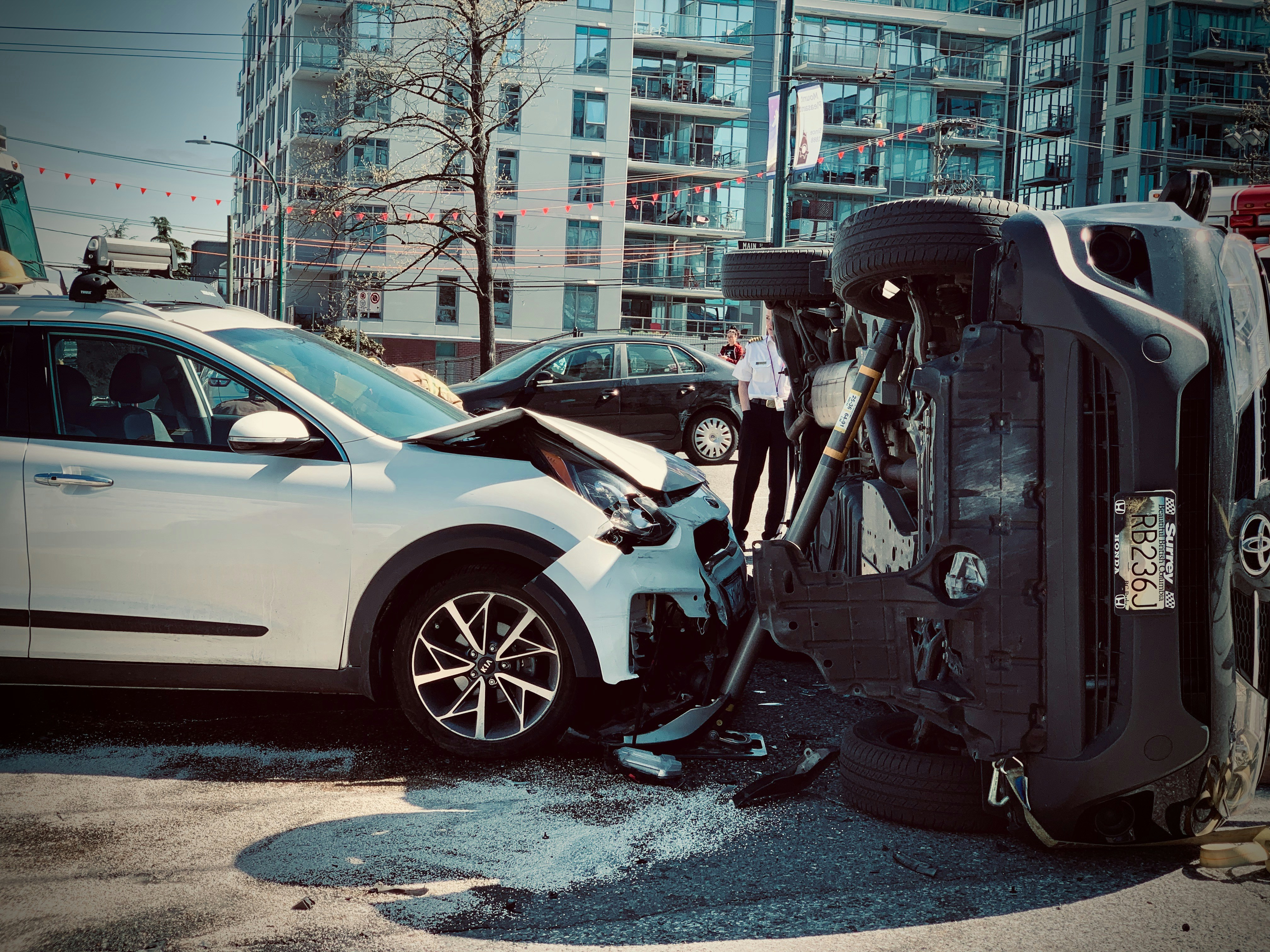
Twenty-seven people on bicycles were killed or injured in Huntington Park in 2023, against eighteen the year before. On the Office of Traffic Safety’s population-weighted and mileage-weighted rankings, the city placed 9th worst of the 103 California cities of between 50,001 and 100,000 people in 2023, against 24th of 104 in 2022.
If you were hit while riding here, two things tend to decide the case and both are settled early: whether a public entity is involved, which shortens your deadline from two years to six months, and whether the driver is ever identified, which changes who pays rather than whether anyone does.
Hit while riding in Huntington Park?
The deadline may be six months, not two years. One conversation establishes which one you are on.
You Had the Same Right to the Road as a Car
Under Vehicle Code 21200, a person riding a bicycle on a highway has all the rights, and all the duties, of the driver of a vehicle. That is the starting point, and it is worth stating plainly because the argument that comes back from an insurer usually assumes the opposite.
The usual version of that argument is that you should have been further right. It is worth knowing exactly what the law says here, because it says less than insurers suggest.
Vehicle Code 21202 asks a cyclist riding slower than traffic to keep as close as practicable to the right-hand curb or edge. Not as close as possible. It then lists four situations where that does not apply:
- Overtaking or passing another bicycle or vehicle going the same way.
- Preparing for a left turn, at an intersection or into a driveway or private road.
- Approaching a place where a right turn is authorized.
- Where it is reasonably necessary to avoid conditions that make it unsafe to continue at the edge. The statute names fixed or moving objects, vehicles, other bicycles, pedestrians, animals, surface hazards, and substandard width lanes.
That last term is defined in the statute itself: a lane too narrow for a bicycle and a vehicle to travel safely side by side within it. Where a lane is that narrow, riding away from the edge is what the law contemplates rather than a failure to follow it.
And on a one-way street with two or more marked lanes, the rule does not apply to you at all. Subdivision (b) lets a cyclist on that kind of road ride as near the left-hand curb or edge as practicable. If you were struck riding the left side of a one-way street, being on the left is not the answer to your claim.
The Passing Rule Is Three Duties, Not One
Vehicle Code 21760 is called the Three Feet for Safety Act, and the three feet is the part everyone knows. It carries two other duties that are less known and often more useful.
Subdivision (b) is a safe-distance duty in its own right. A driver passing a bicycle must do so at a distance that does not interfere with its safe operation, with due regard for the size and speed of both, traffic, weather, visibility, and the surface and width of the road. That can be breached even where three feet was given, which matters because “he gave me three feet” is a common answer from an insurer and it is not a complete one.
Subdivision (c) adds the three-foot minimum and a lane-change duty. A driver overtaking a bicycle in the same lane must, if another lane going the same direction is available, change into it before passing, where that is practicable and lawful.
Subdivision (d) requires a driver who cannot do either to slow to a speed that is reasonable and prudent, and pass only when it would not endanger the cyclist.
A violation matters after a collision, not only before one. Subdivision (e)(2) sets a $220 fine where a collision causes bodily injury to the cyclist and the driver is found to have violated (b), (c) or (d), against $35 for the violation alone. A citation is not the same as civil liability, but it is evidence, and it is worth knowing whether one was issued.
If the Road Itself Was the Problem
Cyclists feel the road surface in a way drivers do not, and this route gets missed.
Government Code 835 makes a public entity liable for injury caused by a dangerous condition of its property. The injured person has to establish that the property was in a dangerous condition when they were hurt, that it caused the injury, and that the condition created a reasonably foreseeable risk of that kind of injury. Then one of two things: either an employee of the entity created the condition through a negligent or wrongful act, or the entity had actual or constructive notice of it in time to have done something about it.
That notice requirement is why the reporting history matters. A defect somebody complained about months ago sits differently from one that appeared last week.
And this is the route with the short clock, six months rather than two years, so a surface-defect case can be over before the rider realizes it was ever a case.
Where the Claim Actually Goes
The City Clerk, City of Huntington Park, 6550 Miles Avenue, Huntington Park, CA 90255.
The city’s own Claim for Damage form puts it in one line: file with the City Clerk within six months following the accident. The form cites the Government Claims Act and Government Code 911.2.
Every public entity in California has 45 days to act on a claim under Government Code 912.4. Huntington Park has also written that period into its own municipal code, as Ordinance 624-NS, effective December 15, 1999, and cites it on the claim form.
Government Code 945.4 then bars a lawsuit for money damages until that claim has been presented and the entity has either acted on it or is treated as having rejected it. A claim the entity simply ignores is deemed rejected once the 45 days are up, which is what allows the lawsuit to proceed.
And presenting the claim is not the last deadline. Once the entity mails or delivers a written rejection, Government Code 945.6 gives you six months from the date of that notice to file suit. If the entity never sends a written rejection, the period is two years from when the cause of action accrued instead. A claim that is ignored therefore leaves more time than one that is formally rejected, which is the opposite of what most people expect.
Presenting a false claim is a felony under Penal Code section 72, which is printed on the form.
Not every public entity is the City. A county road, a transit agency vehicle or a state highway belongs to a different entity with its own claims process, and sending the claim to the wrong one does not stop the clock.
Missing the Six Months Is Not Always the End of It
This is the part most pages leave out, and it is the one worth reading twice if time has already passed.
Government Code 911.4 lets you apply to the entity in writing for permission to present a late claim, within a reasonable time and no more than one year after the claim arose.
Government Code 911.6 then says the board shall grant that application on any of several grounds. The ones that come up most:
Two further grounds matter here and are easy to miss, because they are the ones most people actually fall under. Government Code 911.6(b) also requires the application to be granted where the injured person was a minor for any part of the six months, or was physically or mentally incapacitated for any part of it, provided the application is made within six months of them turning eighteen or of the incapacity ending, or a year after the claim accrued, whichever comes first.
- The failure was through mistake, inadvertence, surprise or excusable neglect, and the entity was not prejudiced in defending the claim by the delay.
- The injured person was a minor for the whole six months.
- The injured person was physically or mentally incapacitated for the whole six months and did not claim because of it.
- The injured person died before the six months ran out.
If the entity refuses, or simply does not act within its own 45 days, Government Code 946.6 allows a petition to the court for relief.
None of this is automatic, and the one-year outer limit is hard. If the six months has gone, that is a reason to ask quickly rather than a reason to assume it is over.
When the Driver Does Not Stop
Fatal and injury hit-and-run collisions in Huntington Park went from 28 in 2022 to 38 in 2023. On the same population-weighted ranking that is 3rd worst of 103 in 2023, against 14th of 104 the year before.
For a cyclist that changes what the claim is. If the driver is never identified, it usually moves to the uninsured motorist coverage on your own auto policy, and it does not matter that you were on a bicycle rather than in the car. Under Insurance Code 11580.2 the definition of who is insured covers resident relatives of the named insured “while occupants of a motor vehicle or otherwise“, which is the language that reaches you on a bike.
Three conditions catch cyclists out, and all three are in the same statute. Where the owner or operator is unknown:
- The vehicle has to have made physical contact with you or with a car you were in. A driver who ran you off the road without touching you is in a different and harder position under this coverage.
- The accident has to be reported to the police within 24 hours, to the department of the city where it happened.
- A statement under oath has to be filed with the insurer within 30 days, setting out the facts of a claim against a driver whose identity cannot be established.
There is also a separate deadline that surprises people: under subdivision (i), no claim accrues under this coverage unless, within two years of the accident, suit has been filed against the uninsured driver, the amount due has been agreed, or arbitration has been formally started in writing by certified mail. Letting a claim sit with an adjuster is not one of the three.
Where the driver is identified, California’s minimum liability limits are Vehicle Code 16056: $30,000 per person and $60,000 per accident for policies issued or renewed on or after January 1, 2025, and $15,000 and $30,000 before that. A serious cycling injury reaches those numbers quickly, which is why underinsured motorist coverage on your own policy is worth checking at the same time.
Driver never identified?
Your own policy may still cover it, even though you were on a bicycle. There are short deadlines attached. We can read the policy with you.
Getting the Collision Report
Huntington Park has its own police force, so the report comes from them rather than from the Sheriff or the CHP.
- Records Bureau: (323) 826-6611. The counter is at 6542 Miles Avenue, next to City Hall, open Monday to Thursday 8am to 6pm and Friday 8am to 5pm, closed weekends.
- A traffic collision report costs $41.00, and the department notes its fees change annually. It is worth knowing the figure before you go.
- Reports are not released to witnesses. They go to the driver involved, the registered owner, the parents of a minor driver, passengers named in the report, insurers of a party, anyone incurring property damage or civil liability, and attorneys representing any of those.
Get it early even if you are not sure you have a claim. The report is where the diagram, the officer’s account and any citation live, and a citation under 21760 is easier to find now than to reconstruct later. If the driver left, note that reporting within 24 hours is also what your own uninsured motorist coverage requires.
Where Would the Case Be Heard?
Not at the courthouse in Huntington Park, and this catches people out. There is a Superior Court building in this city, and the Los Angeles Superior Court assigns no civil matter to it.
Per the court’s own Filing Court Locator for the 90255 ZIP code:
- Unlimited civil, meaning claims over $35,000, is filed at the Norwalk Courthouse.
- Limited civil, meaning $35,000 or less and excluding collections, is filed at the **Stanley Mosk Courthouse** in downtown Los Angeles.
Cases commonly settle without anyone filing anything. But a case filed in the wrong building does not simply proceed there, and the local-sounding answer is the wrong one here.
Huntington Park Bicycle Accident FAQs
The driver says I should have been further right. Does that end my claim?
No, and it is worth checking the statute rather than accepting the premise. Vehicle Code 21202 asks a cyclist to ride as close as practicable to the right, not as close as possible, and lists four situations where that duty does not apply, including where the lane is too narrow for a bicycle and a car to travel safely side by side. On a one-way street with two or more marked lanes, subdivision (b) lets you ride near the left edge instead. And even where you were genuinely too far left, California reduces recovery by your share of the blame rather than barring it.
How long do I have to bring a bicycle accident claim?
Two years from the injury under Code of Civil Procedure 335.1 where a private driver is responsible. Six months where a public entity is, which includes a claim about the road surface itself. If that six months has already passed, Government Code 911.4 and 911.6 provide a late-claim route with a one-year outer limit. Those are very different clocks and the difference is not always obvious from the crash.
I hit a pothole and no car was involved. Is that a claim?
It can be. Government Code 835 makes a public entity liable for a dangerous condition of its property, but you have to show the entity either created it or had actual or constructive notice of it in time to act. Whether anyone reported it before you were hurt often decides the case. The six-month deadline applies, so this is the version worth raising quickly.
The driver drove off. Do I have anything?
Possibly your own policy, since uninsured motorist coverage can apply while you were riding a bicycle. There are conditions: the vehicle must have made contact with you, the accident must be reported to police within 24 hours, and a sworn statement must reach your insurer within 30 days. Huntington Park ranked 3rd worst of the 103 cities in its size group for fatal and injury hit-and-run collisions in 2023, so this comes up here more than in most places. Bring the policy and we will read it with you.
Is it better to settle with insurance or get a lawyer?
An early offer arrives before anyone knows what the injury will cost, which is precisely why it arrives early. Cycling injuries are bad for this, because a shoulder or a wrist that seems to be improving can turn out to need surgery months later. Once you sign a release, undoing it is very difficult. A review costs nothing and commits you to nothing.
Does my immigration status affect my claim?
No. Under Evidence Code 351.2, evidence of a person’s immigration status is not admissible in a civil action for personal injury or wrongful death, and discovery into it is not permitted either. It cannot be raised at trial and it cannot be asked about beforehand. It is not a question we ask you, and not one the other side gets to ask.
Contact a Culver Legal Huntington Park Bicycle Accident Lawyer
Cyclists killed or injured in Huntington Park rose from 18 to 27 in a year, and the city ranked 9th worst of the 103 California cities of its size in 2023. If a public entity was involved your deadline is six months rather than two years, and if that has already passed there may still be a route. We speak Spanish. Call (310) 600-7881 at any hour. The review costs nothing.
Attorney Advertising. Prior results do not guarantee a similar outcome. Culver Legal, LLP is a California law firm. The information on this page is for general informational purposes and does not constitute legal advice.