A brain injury is the one case where the person it happened to is the least reliable narrator of it. Someone walks away from a crash, tells the officer they are fine, declines the ambulance, and then spends the next three months unable to hold a thought, sleeping badly, losing their temper with people they love, and quietly deciding they are just not coping well.
That is the trap this page exists for. Under Government Code 911.2, a claim against a public entity, a Metro bus, a city vehicle, a hazard on a public road, must be presented in writing within six months. Six months is often before anyone has joined the dots. California anticipated this: Government Code 911.4 allows a written application for leave to file late, within a year of the injury, and Government Code 911.6 says the entity shall grant it where the injured person “was physically or mentally incapacitated”. If you are past six months, that is a reason to call today rather than a reason not to call.
Two further grounds matter here and are easy to miss, because they are the ones most people actually fall under. Government Code 911.6(b) also requires the application to be granted where the injured person was a minor for any part of the six months, or was physically or mentally incapacitated for any part of it, provided the application is made within six months of them turning eighteen or of the incapacity ending, or a year after the claim accrued, whichever comes first.
Culver Legal has recovered $200 Million and counting for injured people in California. Contingency, costs advanced, no fee unless we win, and no costs to repay if there is no recovery. Call (310) 600-7881 at any hour.
Where Los Angeles Brain Injuries Happen
Traffic first. A brain does not need to strike anything to be injured; the deceleration alone is enough, which is why a helmeted motorcycle rider and a belted driver in a rear-end collision on the 405 can both end up with one. People struck while walking and riders knocked off a bike have nothing between them and the vehicle at all, and a standing bus passenger has nothing to brace against.
Then falls, which are the largest cause outside vehicles and which happen on stairwells, wet floors, and unlit walkways. Then struck-by injuries on job sites, where the claim often runs against a company other than your employer and sits alongside a workers compensation case. Then assaults.
The pattern that produces the worst outcomes is the quiet one: no loss of consciousness, no ambulance, no scan, and no record at all of the injury for weeks.
The Types of Brain Injury, and Why the Difference Matters
Concussion, the mildest classification and the most misunderstood word on this page. Mild describes the classification, not the experience, and symptoms can persist long after the label suggests they should.
Contusion, a bruise on the brain itself, usually from a direct impact.
Diffuse axonal injury, where rotational force tears connections across the brain rather than damaging one spot. This is the one that changes people, and it is also the one least likely to be visible on the imaging done in an emergency room, because that imaging is looking urgently for bleeding rather than for scattered microscopic damage.
Anoxic and hypoxic injury, where the brain is starved of oxygen, which arises in drownings, crush injuries and cardiac events.
A normal scan is not a clean bill of health. It means the emergency question was answered. What happens to you over the following weeks is a different question, and it is one for your doctor rather than for a website.
Los Angeles Has a Formal Trauma Network. Use It.
Los Angeles County has fifteen trauma centers designated by the California EMS Authority. The Level I centers in and around the city are Cedars-Sinai Medical Center, Los Angeles General Medical Center, Ronald Reagan UCLA Medical Center, Children’s Hospital Los Angeles for pediatric trauma, and Harbor-UCLA Medical Center to the south.
Being treated somewhere that documents a head injury properly matters twice over: once for you, and once for a claim that will later be argued over whether the injury was real. Keep every discharge sheet, including from urgent care.
Has it been more than six months since the accident?
A late claim can still be allowed where the injured person was incapacitated. Do not assume the door is closed.

California Law and Your Right to Recover
Negligence. Under Civil Code 1714 everyone is responsible for injury caused to another by their want of ordinary care.
Fault is shared, not assigned. California reduces recovery by your percentage of fault rather than barring it. On a brain injury claim this argument shows up in an unusual form: insurers do not only dispute fault, they dispute whether the injury exists. Expect the file to lean on the fact that you told someone at the scene you were fine.
The eggshell rule works in your favor. A defendant takes the injured person as they find them. A previous concussion, a migraine history or an existing learning difficulty does not reduce what somebody owes you for making it worse, though an insurer will present it as though it does.
How Culver Legal Values a Los Angeles Brain Injury Claim
Valuation here is different from other injuries, because the largest numbers are in the future rather than in the file.
- Medical costs already incurred, including imaging, neurology and any inpatient stay
- Future care, including neuropsychological assessment, cognitive rehabilitation, and attendant care where independence is affected
- Lost income to date
- Lost earning capacity, which on a serious brain injury is usually the single largest figure and which requires evidence about the career that is no longer available rather than the job that was lost
- Pain and suffering, valued against the medical record
- Loss of consortium, where a spouse’s relationship is materially changed
The people best placed to describe a brain injury are usually not the injured person. Partners, parents, colleagues and friends notice the change first, and their accounts do real work in a claim.
Which Court Will Hear My Los Angeles Case?
The court covering the place where the injury happened, not the one nearest the hospital treating you.
Los Angeles County handles this differently from most of California, and it is set out in a standing order of the court. General Order 2024-GEN-003-00, filed 17 May 2024, records that since 10 October 2022 every newly filed personal injury case is filed in the judicial district where the incident arose.
The court is also retiring its Personal Injury Hub in favor of Independent Calendar courtrooms, where one judge manages the case throughout. Since 8 January 2024 personal injury cases in the Central District have been assigned to IC departments at the Stanley Mosk Courthouse, and hub departments have been closing into new IC courtrooms as that proceeds, Department 30 into Department T at the Alhambra Courthouse and Department 31 into Department B at the Van Nuys Courthouse.
That does not change whether you have a claim. It changes where it is filed and who manages it, and filing in the wrong district spends time a two-year deadline does not give back.
Where You Are Taken Matters, and in Los Angeles It Varies
Los Angeles County has fifteen designated trauma centers, and which one receives you depends on where the incident happened rather than on where you live.
Verified against the California EMS Authority’s designated and ACS-verified trauma center list, the Level I centers in and around the city are Cedars-Sinai Medical Center, Los Angeles General Medical Center, Ronald Reagan UCLA Medical Center, Harbor-UCLA Medical Center, and Children’s Hospital Los Angeles for children. Level II centers including California Hospital Medical Center, Northridge, Providence Holy Cross, St. Francis and Huntington Memorial cover the rest of the county.
Why that belongs in a legal claim rather than a medical one. The records that prove the injury sit with whichever facility received you, and across a county this size that is frequently not the hospital nearest home. A serious injury also generates records at more than one facility as somebody is transferred, and gathering all of them rather than the first set to arrive is a large part of what an early demand gets wrong.
Can an MRI Prove a Traumatic Brain Injury?
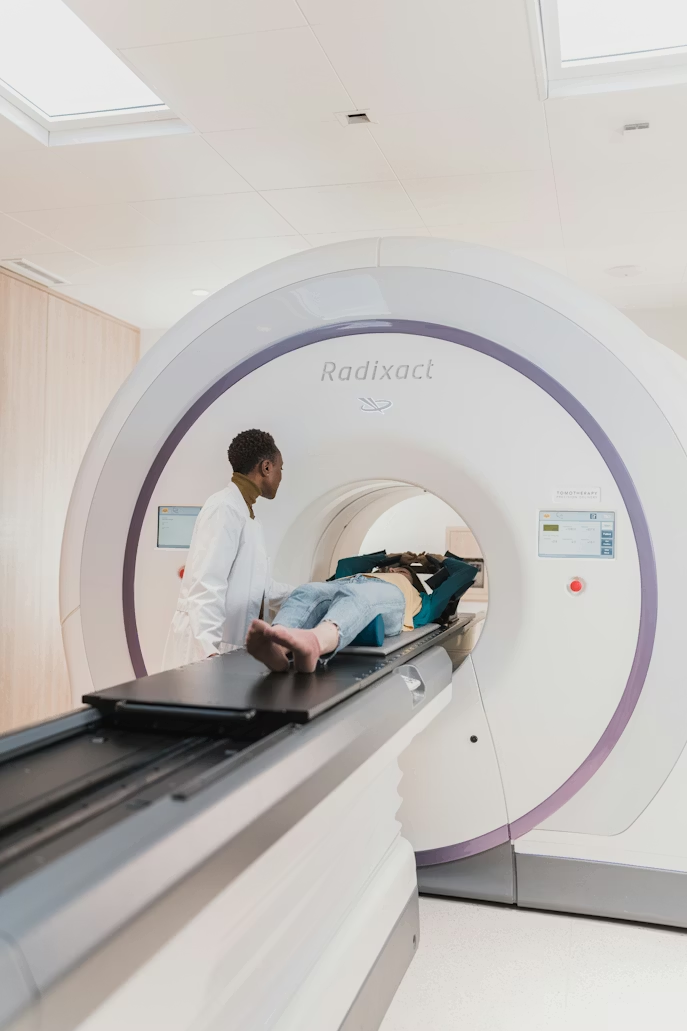
An MRI can show things a CT cannot, and neither is a yes-or-no test for a brain injury.
A CT scan in an emergency department is looking for bleeding or swelling that needs surgery that night. It is good at that and it is not designed to find diffuse axonal injury, where rotational force tears nerve fibers throughout the brain rather than producing one bleed in one place. That is why so many people are discharged with a clear scan and lasting symptoms.
More detailed imaging can help, and the stronger evidence is usually not imaging at all. Neuropsychological testing measures attention, memory, processing speed and executive function against what somebody of your age and background should manage. It measures function rather than structure, which is what the case is actually about.
Is a brain injury a lifetime disability, and can you recover fully? Both happen. A great many people recover completely, and a minority do not, and nothing in the initial grading reliably tells you which group somebody is in. That uncertainty is precisely why an early settlement offer in a brain injury case is priced on the assumption that you recover.
Deadlines to File a Los Angeles Brain Injury Claim
Two years from the injury for an ordinary claim, under Code of Civil Procedure 335.1.
Six months where a public entity is involved, under Government Code 911.2. That is the same clock a family faces on a wrongful death claim where the injury proves fatal, and it is not paused for a child.
Up to one year, by application, where six months was missed. Government Code 911.4 allows a written application for leave to present a late claim within a reasonable time not exceeding one year from when the claim accrued, with the reason for the delay stated. Under Government Code 911.6 the entity shall grant it where the failure was through mistake, inadvertence, surprise or excusable neglect and the entity was not prejudiced, or where the injured person was physically or mentally incapacitated.
Injured children. Code of Civil Procedure 352 pauses the ordinary period while an injured person is under 18.
Has someone close to you not been themselves since an accident?
Families notice a brain injury before the injured person does. If that is you, the call is worth making on their behalf.
What to Do After a Head Injury in Los Angeles
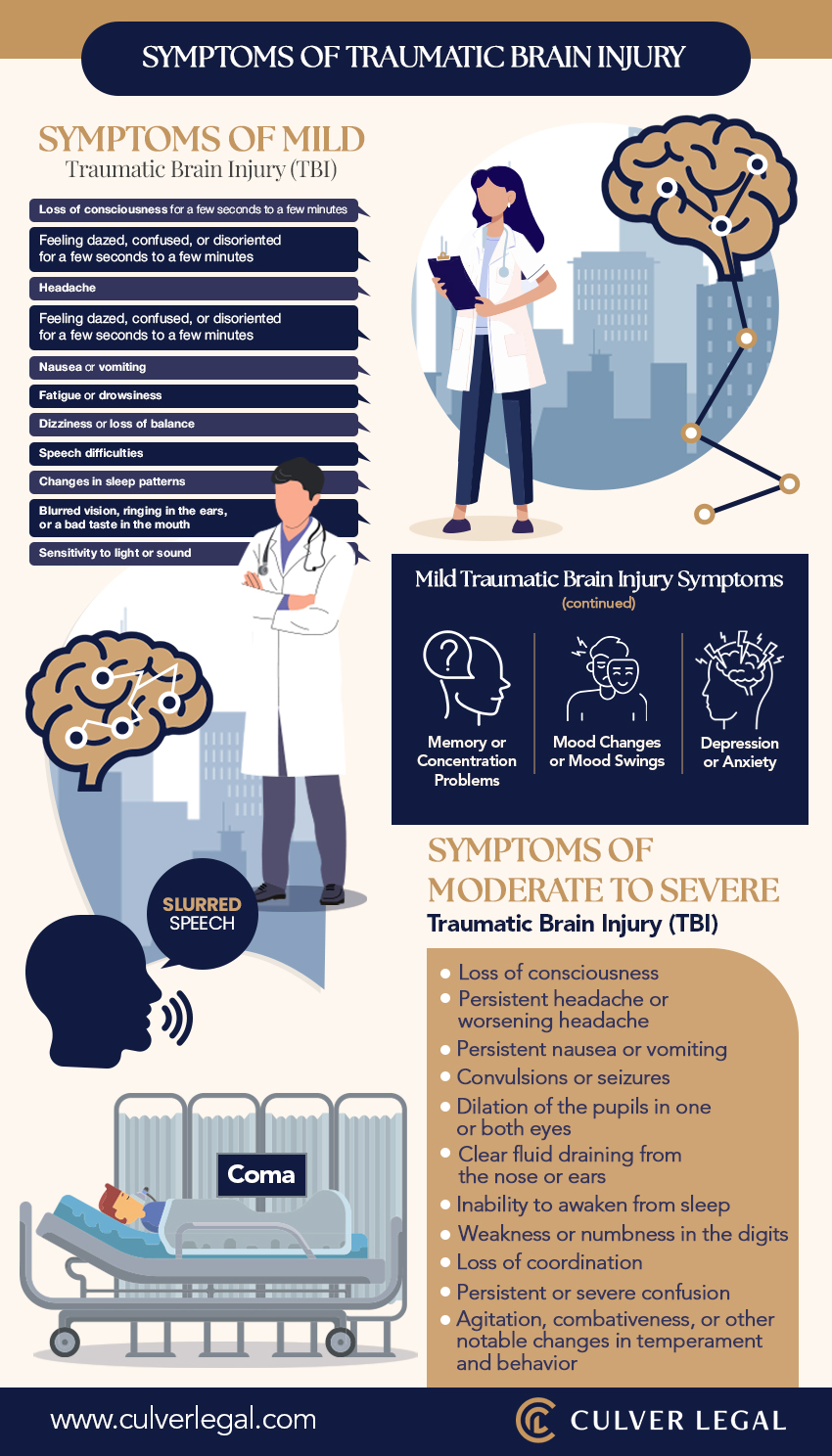
Get assessed, and say a head was involved, even if you did not lose consciousness. Most people with a brain injury never lost consciousness at all.
Write down what you notice, from today. Headaches, light sensitivity, losing words, sleeping too much or not at all, irritability, missing turns on a route you know. A dated note made at the time is better evidence than a recollection given a year later, and it helps your doctor too.
Ask someone who knows you to write down what they notice. They will see things you cannot.
Do not agree to a recorded statement or sign a release. On this injury above all others, the early offer is made before anybody knows what the case is worth.
Note whether a public entity was involved, because that starts the six-month clock described above.
What does it cost, and what comes out of a settlement? Nothing up front. The fee is a percentage of the recovery under a written fee agreement, and there is no fee if there is no recovery. Out of a settlement come the fee, the case costs advanced, and any medical liens, which is why the headline figure and the amount received are different numbers. The full breakdown is in how a California brain injury claim works.
Why Los Angeles Clients Choose Culver Legal
We come to you. In the hospital, at home, or anywhere getting across this city is not realistic. On a brain injury case that is not a courtesy, it is how the work gets done.
Our team speaks Spanish, Farsi, Filipino, Hindi, Mandarin and Korean.
Nothing up front. Contingency, costs advanced by the firm, no fee unless we win. We advance the case costs, and if there is no recovery you are not charged those costs either. Culver Legal was founded in 2020, has recovered $200 Million and counting, and answers the phone 24 hours a day.
Los Angeles Brain Injury FAQs
I am undocumented. Can I still bring a claim without putting myself at risk?
Yes, and the protection is stronger than most people expect. Under Evidence Code 351.2, added by AB 2159, evidence of a person’s immigration status is not admissible in a civil action for personal injury or wrongful death, and discovery into it is not permitted either. So it cannot be raised at trial and it cannot be asked about beforehand. It is not a question we ask you, and it is not a question the other side gets to ask.
My scan came back normal but I have not felt right since. Is there anything to claim?
Possibly. Emergency imaging is looking urgently for bleeding, and a normal result answers that question rather than every question. Injuries that involve rotational force can affect connections across the brain without showing up as a single visible spot. What matters now is that a doctor is following your symptoms and that the record shows when they started.
It has been more than six months and a city bus was involved. Have I lost my chance?
Not necessarily. Government Code 911.4 allows a written application for leave to file a late claim within a year of the injury, and Government Code 911.6 says the public entity shall grant it where the injured person was physically or mentally incapacitated, among other grounds. A brain injury is one of the most common honest reasons a deadline gets missed. Call rather than assume.
My husband seems fine to strangers but he is not the same at home. Does that count?
It counts, and it is the most commonly overlooked part of these claims. The people who live with someone notice changes in memory, temper, initiative and sleep that a short medical appointment does not capture. Written accounts from family, kept as things happen, carry real weight.
Contact a Culver Legal Los Angeles Brain Injury Lawyer
If you or someone in your family has not been right since an accident in Los Angeles, call (310) 600-7881 at any hour. The review costs nothing, and if a public entity is involved the timing matters more than it does on any other kind of claim.
Attorney Advertising. Prior results do not guarantee a similar outcome. Culver Legal, LLP is a California law firm. The information on this page is for general informational purposes and does not constitute legal advice, and nothing on it is medical advice.