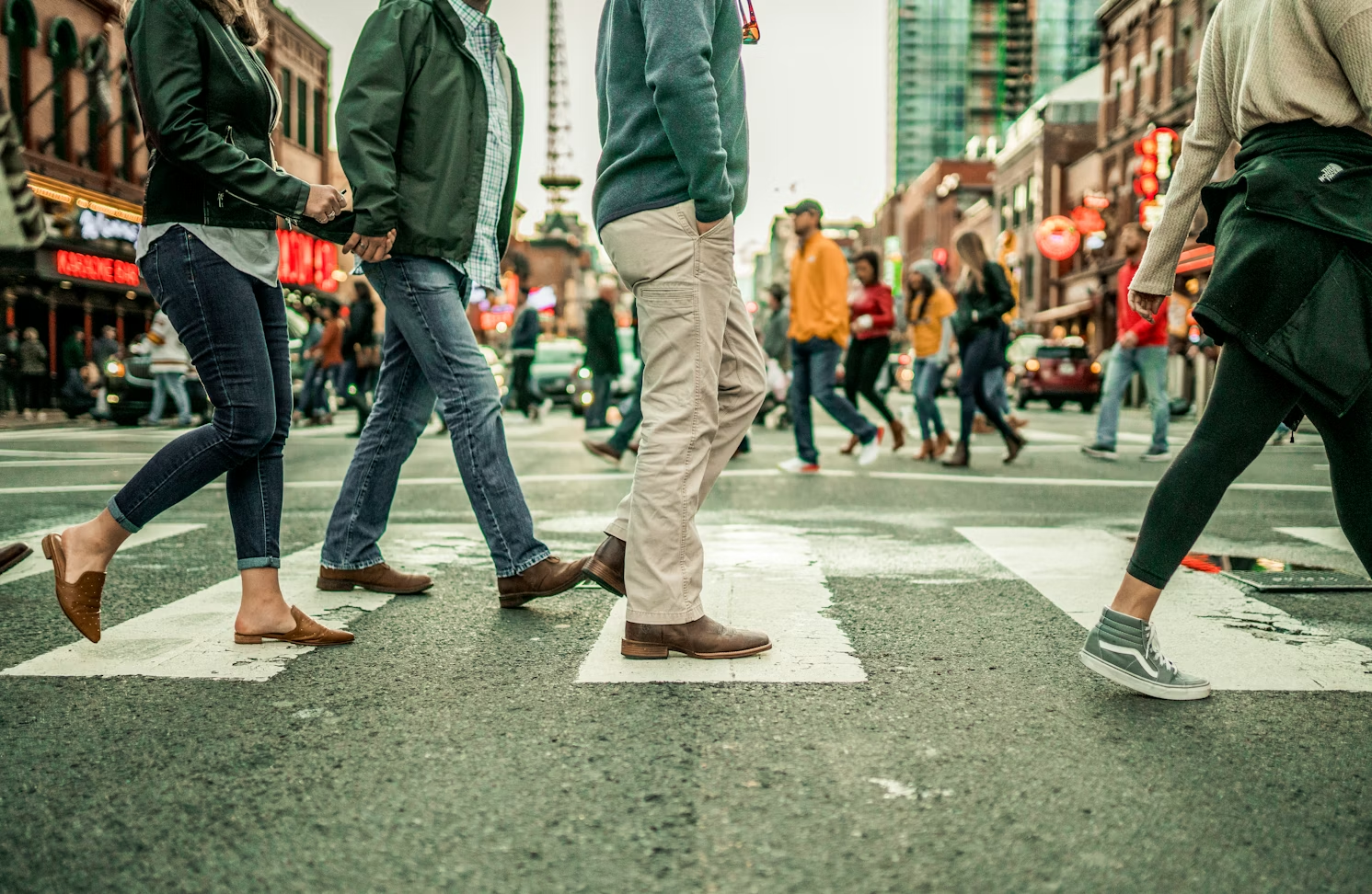
If you were hit crossing anywhere other than a crosswalk, somebody has probably already told you the accident was your own fault. Insurers say it early and say it confidently, and most people accept it.
It is not the law. California’s Freedom To Walk Act changed Vehicle Code 21955 and Vehicle Code 21954 so that an officer shall not stop a pedestrian for crossing outside a crosswalk unless a reasonably careful person would realize there was an immediate danger of a collision. And both sections say, in their own words, that they do not relieve a driver “from the duty to exercise due care for the safety of any pedestrian upon a roadway”. Where you crossed changes the argument about percentages. It does not hand the driver a defense.
Culver Legal has recovered $200 Million and counting for injured people in California. Contingency, costs advanced, no fee unless we win, and no costs to repay if there is no recovery. Call (310) 600-7881 at any hour.
Where Do Pedestrians Get Hit in Los Angeles?
In 2019, the most recent year with usable data for this city, the California Office of Traffic Safety recorded 3,319 pedestrians killed and injured in Los Angeles, ranking it 4th worst of 15 California cities of similar size.
The geography behind that number is specific. This city’s arterial corridors, Vermont, Western, Figueroa, Sepulveda and Venice, run wide and fast with long distances between signals, which is exactly the design that produces mid-block crossings. Add left-turning drivers looking for a gap in oncoming traffic rather than at the crosswalk they are turning across, and right-on-red drivers watching left while rolling right, and you have most of the serious cases in the city.
Bus stops matter too. A stop placed on the far side of a wide arterial creates a crossing every time somebody gets off.
What Injuries Do Pedestrian Accidents Cause?
Head injuries. A pedestrian has nothing between them and the vehicle, and then nothing between them and the road. If somebody has not been themselves since being hit, that is a brain injury question and it should be raised early rather than late.
Lower leg and pelvic fractures, from the bumper itself, which is at knee height on a car and higher on an SUV or a truck.
Spinal injuries, from the second impact with the ground.
Internal injuries, which is why “I got up and walked home” is not reassurance.
Fatal injuries. Where a pedestrian is killed the claim becomes a wrongful death claim, and California is specific about who is entitled to bring one.
What hit you changes who you are claiming against. A private driver is an ordinary car accident claim. A delivery van or a tractor unit brings an employer and a set of federal records with an expiry date, which is what a commercial vehicle claim turns on. A public bus or a city vehicle drops the deadline to six months, the same rule that governs a claim brought by a bus passenger. Somebody knocked off a bicycle rather than struck on foot is covered by the same yielding rules, because the 2023 amendments are written in terms of a device moving exclusively by human power. And anyone struck while working, delivering or crossing between sites has a work injury claim alongside it.
What Does California Law Say About Pedestrian Right of Way?
In a crosswalk, the driver yields. Under Vehicle Code 21950 a driver shall yield to a pedestrian crossing in any marked crosswalk, or in an unmarked crosswalk at an intersection. That second part is worth reading twice: an intersection without painted lines still has a crosswalk in law.
Outside a crosswalk, you yield, but the driver still owes you care. Vehicle Code 21954 requires a pedestrian to yield to vehicles so near as to be an immediate hazard, and then says plainly that this does not relieve the driver of the duty to exercise due care.
Crossing mid-block is largely no longer an enforcement matter. Since the Freedom To Walk Act, an officer may not stop you for it absent an immediate danger of collision.
Fault is shared, not assigned. Under Civil Code 1714 everyone is responsible for injury caused by their want of ordinary care, and California reduces recovery by your percentage of fault rather than barring it. Being found partly responsible lowers the figure. It does not end the claim.
Been told you were jaywalking, so there is no claim?
The statute itself says a driver’s duty of care survives where you crossed. That is worth one phone call before you accept anything.

What Is My Los Angeles Pedestrian Accident Claim Worth?
- Medical costs already incurred, from the scene through surgery and rehabilitation
- Future care, which on a leg or pelvic fracture regularly includes hardware removal and revision
- Lost income, and lost earning capacity where the injury ends a kind of work
- Pain and suffering, valued against the medical record
- Scarring and disfigurement, valued separately where permanent
- The cost of not being able to walk in a city built around driving, which sounds soft and is a real, documentable expense in transport and care
Which Court Will Hear My Los Angeles Case?
The court covering the place where you were struck, not the one nearest your home.
Los Angeles County handles this differently from most of California, and it is set out in a standing order of the court. General Order 2024-GEN-003-00, filed 17 May 2024, records that since 10 October 2022 every newly filed personal injury case is filed in the judicial district where the incident arose.
The court is also retiring its Personal Injury Hub in favor of Independent Calendar courtrooms, where one judge manages the case throughout. Since 8 January 2024 personal injury cases in the Central District have been assigned to IC departments at the Stanley Mosk Courthouse. Hub departments have been closing into new IC courtrooms as that proceeds, Department 30 into Department T at the Alhambra Courthouse and Department 31 into Department B at the Van Nuys Courthouse.
That does not change whether you have a claim. It changes where it is filed and who manages it, and filing in the wrong district spends time a two-year deadline does not give back.
Where You Are Taken Matters, and in Los Angeles It Varies
Los Angeles County has fifteen designated trauma centers, and which one receives you depends on where the collision happened rather than on where you live.
Verified against the California EMS Authority’s designated and ACS-verified trauma center list, the Level I centers in and around the city are Cedars-Sinai Medical Center, Los Angeles General Medical Center, Ronald Reagan UCLA Medical Center, Harbor-UCLA Medical Center, and Children’s Hospital Los Angeles for children. Level II centers including California Hospital Medical Center, Northridge, Providence Holy Cross, St. Francis and Huntington Memorial cover the rest of the county.
Why that belongs in a legal claim rather than a medical one. The records that prove your injury sit with whichever facility received you, and across a county this size that is frequently not the hospital nearest your home. A serious injury also generates records at more than one facility as somebody is transferred. Gathering all of them, rather than the first set to arrive, is a large part of what an early demand gets wrong.
How Long Do I Have to File a Pedestrian Claim in Los Angeles?
Two years from the collision under Code of Civil Procedure 335.1.
Six months where a public entity is involved, under Government Code 911.2. For pedestrians this catches more than people expect: a Metro or city bus, a municipal vehicle, a signal that was not working, or a crossing that was unlit.
Up to a year by application if that was missed. Government Code 911.4 and Government Code 911.6 allow a late claim, which the entity shall grant on grounds including that the injured person was physically or mentally incapacitated.
Two further grounds matter here and are easy to miss, because they are the ones most people actually fall under. Government Code 911.6(b) also requires the application to be granted where the injured person was a minor for any part of the six months, or was physically or mentally incapacitated for any part of it, provided the application is made within six months of them turning eighteen or of the incapacity ending, or a year after the claim accrued, whichever comes first.
Injured children. Code of Civil Procedure 352 pauses the ordinary period while an injured person is under 18.
Was a bus, a city vehicle or a dead traffic signal involved?
That puts you on a six-month clock instead of two years. One call establishes which one you are on.
What Should I Do After Being Hit as a Pedestrian?
Accept the ambulance. Pedestrians are the group most likely to decline transport and the group least able to assess themselves, because a head injury is deciding whether you have a head injury.
Say it if you are hurting. The Los Angeles Police Department’s own training material states that no report is required where a collision produced vehicle damage only with no injury and no complained-of pain. Any complained-of pain or visible injury requires one.
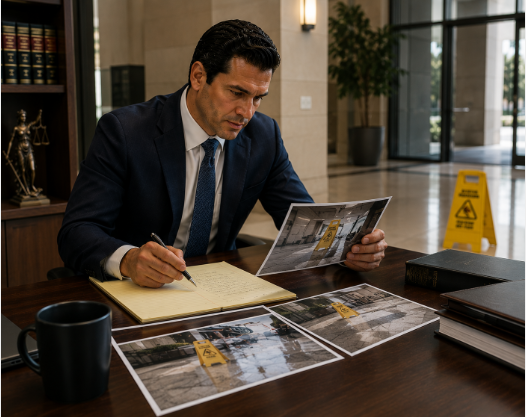
Photograph the crossing, not just the vehicle. How far the nearest signal is, whether the crosswalk is painted, whether the lighting works, whether a parked truck blocked the sightline. On a pedestrian case the road itself is usually the best witness.
Get the details of anyone who stopped. Pedestrian collisions have more witnesses than car crashes and they scatter faster.
Do not agree that you stepped out, and do not give the driver’s insurer a recorded statement. That sentence is the one the whole file will be built on.
What does it cost, and what comes out of a settlement? Nothing up front. The fee is a percentage of the recovery under a written fee agreement, and there is no fee if there is no recovery. Out of a settlement come the fee, the case costs advanced, and any medical liens, which is why the headline figure and the amount you receive are different numbers. The full breakdown is in how a California pedestrian claim works.
Why Do Los Angeles Clients Choose Culver Legal?
We come to you. In the hospital, at home, or anywhere you cannot reach on foot, which after this injury is most places.
Our team speaks Spanish, Farsi, Filipino, Hindi, Mandarin and Korean.
Nothing up front. Contingency, costs advanced by the firm, no fee unless we win. We advance the case costs, and if there is no recovery you are not charged those costs either. Culver Legal was founded in 2020, has recovered $200 Million and counting, and answers the phone 24 hours a day.
Los Angeles Pedestrian Accident FAQs
I am undocumented. Can I still bring a claim without putting myself at risk?
Yes, and the protection is stronger than most people expect. Under Evidence Code 351.2, added by AB 2159, evidence of a person’s immigration status is not admissible in a civil action for personal injury or wrongful death, and discovery into it is not permitted either. So it cannot be raised at trial and it cannot be asked about beforehand. It is not a question we ask you, and it is not a question the other side gets to ask.
I crossed in the middle of the block. Is that the end of it?
No. Since the Freedom To Walk Act an officer may not even stop a pedestrian for crossing outside a crosswalk unless a reasonably careful person would realize there was an immediate danger of a collision. More importantly, Vehicle Code 21954 says in terms that it does not relieve a driver of the duty to exercise due care for the safety of any pedestrian on the roadway. Where you crossed affects the share of fault. It does not remove the driver’s obligation.
There were no painted lines, so was it even a crosswalk?
Very possibly. Vehicle Code 21950 requires a driver to yield to a pedestrian in any marked crosswalk or in an unmarked crosswalk at an intersection. An intersection with no paint still has a crosswalk in law, and this is one of the most common misunderstandings in these cases.
The driver said the sun was in their eyes. Does that excuse it?
No. Conditions a driver can anticipate, low sun on an east-west street at the wrong hour, rain, glare, are reasons to drive more carefully rather than defenses for not seeing somebody. Vehicle Code 21950 requires all due care on approach to a crosswalk regardless of the conditions.
Contact a Culver Legal Los Angeles Pedestrian Accident Lawyer
If you were hit while walking anywhere in Los Angeles, call (310) 600-7881 at any hour. The review costs nothing, and if a bus or the city was involved the clock is shorter than you would expect.
Attorney Advertising. Prior results do not guarantee a similar outcome. Culver Legal, LLP is a California law firm. The information on this page is for general informational purposes and does not constitute legal advice.