 Skip to Content

Driver Liability Vs Trucking Company Liability
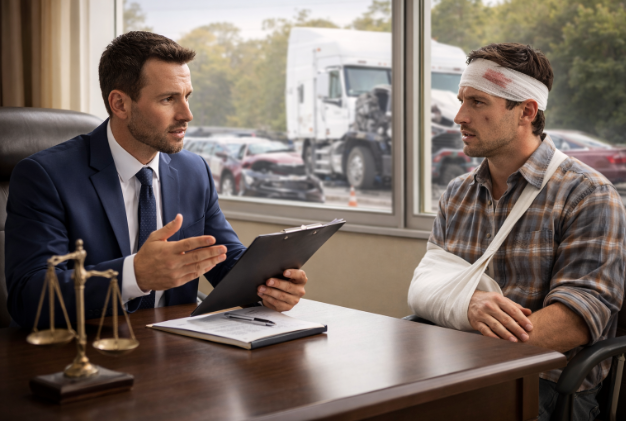
Determining who is responsible after a truck-related accident often involves more than identifying a single at-fault party. Unlike typical passenger vehicle collisions, commercial trucking cases may involve multiple layers of responsibility. The actions of the individual driver, the policies of the trucking company, and the structure of the employment relationship all play a role in how liability is assessed.
Understanding the distinction between driver liability and trucking company liability helps clarify how fault is assigned and how claims are evaluated. In many cases, both parties may share responsibility depending on the circumstances leading up to the incident.
What Driver Liability Means In Truck Accident Cases
Driver liability refers to situations where the individual operating the truck is directly responsible for causing the accident. This typically involves behavior or decisions made by the driver that fall below the standard of reasonable care expected on the road.
Examples of driver-related negligence may include distracted driving, speeding, failing to obey traffic signals, or driving under the influence of substances. In commercial trucking, additional considerations apply, such as compliance with hours-of-service rules, which limit how long a driver can operate without rest.
If a driver violates these standards and their actions contribute to an accident, they may be held personally liable. However, this does not automatically exclude the trucking company from also being responsible.
Understanding Trucking Company Liability
Trucking company liability focuses on whether the company’s actions or policies contributed to the accident. Companies are responsible for hiring qualified drivers, maintaining their vehicles, and enforcing safety protocols. When these responsibilities are not met, the company may bear legal responsibility.
For example, if a company hires a driver with a known history of unsafe driving or fails to properly train them, this may indicate negligent hiring or supervision. Similarly, if the company neglects vehicle maintenance or ignores regulatory requirements, those failures can create conditions that lead to accidents.
In many cases, liability is not limited to one party. Both the driver’s conduct and the company’s oversight may be examined together to determine how responsibility should be divided.
The Role Of Employment Status In Determining Liability
One of the key factors in assigning liability is whether the driver is classified as an employee or an independent contractor. This distinction affects how responsibility is distributed between the driver and the trucking company.
If the driver is an employee, the company may be held liable under a legal principle that assigns responsibility for actions performed within the scope of employment. This means that even if the driver was directly negligent, the company can still be accountable.
If the driver is classified as an independent contractor, the analysis becomes more complex. While companies may attempt to limit their liability through this classification, courts often examine the level of control the company had over the driver’s work. If the company exercised significant control, it may still be held responsible.
When Both The Driver And Company Share Responsibility
Truck accident cases frequently involve shared liability. This occurs when both the driver’s actions and the company’s policies or practices contribute to the incident. For example, a driver may have been fatigued due to long hours, while the company failed to enforce rest requirements or encouraged unrealistic delivery schedules.
In these situations, liability may be divided between the parties based on their respective roles in causing the accident. This allocation can affect how claims are handled and how compensation is pursued.
Because multiple factors are often involved, evaluating these cases requires a detailed review of both individual conduct and organizational practices. Resources provided by a truck accident attorney often focus on analyzing these overlapping responsibilities to clarify how fault is distributed.
How Federal And State Regulations Influence Liability
The trucking industry is governed by a range of federal and state regulations designed to promote safety. These rules influence how liability is determined by establishing standards for driver behavior, vehicle maintenance, and company operations.
For instance, federal regulations set limits on driving hours, require regular vehicle inspections, and mandate recordkeeping for driver activity. Violations of these rules can serve as evidence of negligence. If a driver exceeds allowable hours or a company fails to maintain accurate logs, these factors may contribute to liability.
Regulatory compliance is not optional. When either the driver or the company disregards these requirements, it can directly affect how responsibility is assigned after an accident.
Common Scenarios That Shift Liability Toward The Company
There are specific situations where liability is more likely to rest with the trucking company rather than the driver alone. These often involve systemic issues rather than isolated driver errors.
Examples include inadequate training programs, failure to conduct background checks, or pressure placed on drivers to meet unrealistic deadlines. In some cases, companies may encourage practices that indirectly lead to unsafe behavior, such as skipping required rest periods or delaying maintenance.
When these patterns are present, the company’s role becomes central to the liability analysis. The focus shifts from individual actions to broader operational decisions that created unsafe conditions.
Situations Where The Driver May Bear Primary Responsibility
While companies are often involved, there are cases where the driver’s actions are the primary cause of the accident. This typically occurs when the driver engages in behavior that is clearly outside the scope of their duties or violates established rules.
Examples include driving under the influence, engaging in reckless behavior, or ignoring explicit company policies designed to ensure safety. In these cases, the driver may bear the majority of the liability, even if the company is still examined as part of the overall analysis.
The distinction depends on whether the driver’s actions were foreseeable and whether the company took reasonable steps to prevent such behavior.
The Importance Of Evidence In Establishing Liability
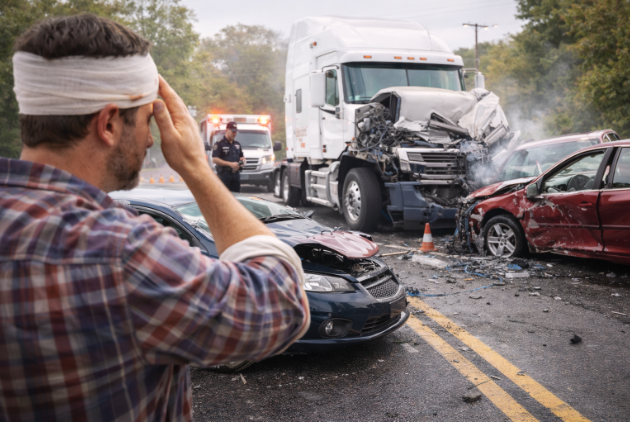 Determining liability in truck accident cases relies heavily on evidence. This includes driver logs, maintenance records, employment files, and data from onboard systems such as electronic logging devices and event data recorders.
These sources help reconstruct the sequence of events and identify whether safety regulations were followed. For example, logbooks may reveal whether a driver exceeded allowable hours, while maintenance records can indicate whether the vehicle was properly serviced.
Because liability may involve multiple parties, the evidence must be reviewed in a comprehensive way. Each piece contributes to a broader understanding of how the accident occurred and who is responsible.
How Liability Affects The Structure Of A Claim
The distinction between driver and company liability directly affects how a claim is structured. When multiple parties are involved, claims may be filed against both the driver and the trucking company. This can influence how damages are allocated and how negotiations or legal proceedings unfold.
Insurance coverage is also shaped by these distinctions. Commercial trucking companies typically carry higher policy limits than individual drivers, which can affect how claims are evaluated. Identifying all responsible parties ensures that the full scope of liability is considered.
Understanding these dynamics provides a clearer picture of how truck accident claims are developed and why liability analysis is more complex than in standard vehicle collisions.