 Skip to Content

What to Do Immediately After a Car Accident in California
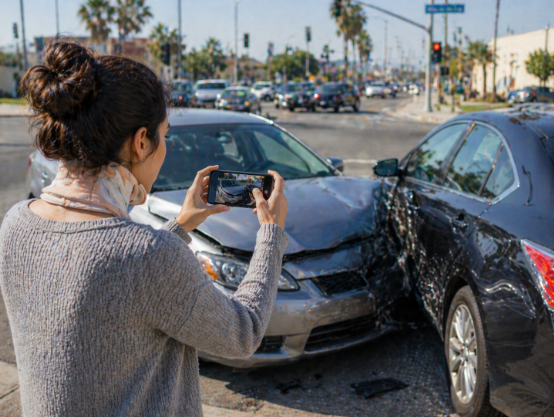
If you were just in a car accident in California, the actions you take in the next few hours will directly affect your health, your legal rights, and your ability to recover compensation. California is an at-fault insurance state, meaning the driver who caused the crash is responsible for the resulting injuries and damages. What you do, and what you avoid doing, from the moment the collision happens, can make or break a future claim.
Step 1: Check for Injuries and Call 911
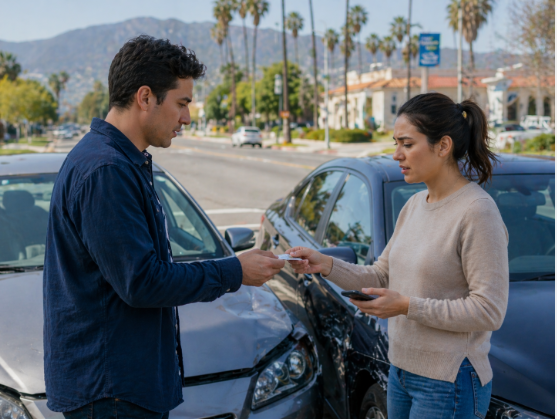 Before anything else, assess yourself and your passengers for injuries. Do not assume you are uninjured because you feel fine. Adrenaline masks pain, and many serious injuries, including traumatic brain injuries, internal bleeding, and spinal damage, do not produce immediate symptoms. Call 911 immediately. California law requires you to report any accident involving injury or death to law enforcement. A police report creates an official record that insurance companies and attorneys rely on when evaluating your claim.
Stay at the scene. Leaving before police arrive is a misdemeanor under California Vehicle Code Section 20002; leaving when someone is injured is a felony under Section 20001.
Step 2: Move to Safety if You Can
If your vehicle is drivable and remaining in its current position creates a hazard, a live lane on a freeway, for example, California Vehicle Code Section 20002 requires you to move to the nearest safe location. Turn on your hazard lights. If you cannot move the vehicle, exit carefully and stand away from traffic. Never stand between vehicles or in an active travel lane while waiting for police.
Step 3: Document Everything at the Scene
Your phone is one of your most valuable tools in the minutes after a crash. Use it to capture everything you can while the scene is still fresh.
- Photograph all vehicles from multiple angles, including close-ups of all damage points
- Photograph the overall scene, lane positions, skid marks, traffic controls, road conditions, and lighting
- Photograph any visible injuries on yourself and your passengers
- Take a photo of the other driver’s license plate before any vehicle is moved
- Record a short video walking the perimeter of the scene
- Note the time, weather, and road conditions in a voice memo or text to yourself
Courts allow this documentation as evidence. Insurers use scene photographs to reconstruct the fault. The more you capture now, the stronger your position later.
Step 4: Exchange Information, Know What Is Required
California law requires all drivers involved in a collision to exchange the following information:
- Full legal name
- Current home address
- Driver’s license number
- Vehicle registration number
- Proof of insurance (carrier name, policy number, agent contact)
This is required under California Vehicle Code Section 16025. Refusing to exchange this information is a misdemeanor. If the other driver refuses, do not argue. Note their plate number and provide it to responding officers.
If there are witnesses, ask for their names and phone numbers. Witness statements can be decisive when two drivers give conflicting accounts of how an accident happened.
Step 5: Get Medical Attention, Even If You Feel Fine
Go to an emergency room, urgent care, or your primary care physician as soon as possible after any collision, even a low-speed one. This step protects both your health and your legal claim.
Insurance adjusters actively look for gaps in medical treatment. If you wait days or weeks to see a doctor, the insurer will argue your injuries were not serious or were caused by something other than the crash. A same-day or next-day medical record connecting your injuries to the accident closes that argument.
According to the National Highway Traffic Safety Administration (NHTSA), approximately 2.1 million people are injured in motor vehicle crashes in the United States annually, and delayed treatment is one of the most common reasons legitimate injury claims are undervalued or denied.
Tell every treating provider exactly how the accident happened and what symptoms you are experiencing. Be thorough and accurate. Your medical records will be a primary source of evidence for your claim.
Step 6: Report the Accident to the DMV If Required
California law requires you to file an SR-1 form with the California DMV within 10 days if the accident resulted in injury, death, or property damage over $1,000. This is separate from any police report. You can file online at dmv.ca.gov. Failure to file when required can result in license suspension.
Step 7: Notify Your Insurance Company
Report the accident to your own insurer as soon as reasonably possible. Most policies include a prompt reporting requirement, and failure to report can affect your own coverage. Reporting an accident is not the same as admitting fault. California follows a pure comparative fault system, meaning even if you share some responsibility for the crash, you can still recover damages reduced by your percentage of fault.
When you call your insurer, report the facts: when, where, who was involved, whether anyone was injured, and that you have documentation. Do not offer speculation about fault. Do not apologize. Do not give a recorded statement without first speaking with an attorney.
What NOT to Do After a California Car Accident
The steps above protect you. These mistakes undo that protection.
Do Not Admit Fault at the Scene
Even saying “I’m sorry” to another driver is routinely used by insurers as an admission of liability. Emotions run high after a crash. Keep your statements factual and brief. “I was traveling southbound on the 405, and our vehicles collided” is a statement of fact. “I didn’t see you coming; I should have been paying more attention” is an admission that will follow your claim.
Do Not Give a Recorded Statement to the Other Driver’s Insurer
The other driver’s insurance company will call you quickly after a crash. They are not calling to help you. They are calling to gather statements they can use to minimize their payout. You are not required by law to give a recorded statement to an opposing insurer. Politely decline and tell them your attorney will be in contact. If you have not yet hired an attorney, say you will be in touch shortly.
Do Not Accept a Fast Settlement Offer
Insurance companies frequently offer quick settlements in the days following an accident, before your full injuries have been diagnosed, before you know whether you will need surgery, before the long-term impact of your injuries is clear. Once you sign a release, you cannot seek additional compensation. An offer that seems reasonable on day three may be a fraction of what you actually need.
Do Not Post About the Accident on Social Media
Anything you post publicly can be used against you. A photo of you at a friend’s birthday party three weeks after a crash that claimed a serious back injury will appear in the insurer’s evidence file. Keep all accident-related communications private until your case is fully resolved.
Do Not Delay Hiring Legal Help
California’s statute of limitations for personal injury claims is two years from the date of the accident under California Code of Civil Procedure Section 335.1. That sounds like a long time. Evidence disappears faster. Witnesses become unreachable. Surveillance footage gets overwritten. The earlier an attorney investigates your case, the more evidence they can preserve.
What Injuries Are Most Common in California Car Accidents?
Even accidents that appear minor can produce serious injuries. The most common include:
- Whiplash and cervical spine injuries are the most frequently reported injuries in rear-end collisions; symptoms often appear 24 to 72 hours after impact
- Traumatic brain injuries (TBI) range from concussion to severe cognitive impairment; a vehicle does not need to sustain visible damage to produce a TBI
- Herniated discs, lumbar and thoracic injuries that may require months of treatment or surgical intervention
- Broken bones, wrists, ribs, clavicles, and femurs are commonly fractured in high-impact collisions
- Internal organ injuries are often undetected without imaging; they can be life-threatening if untreated
- Soft tissue injuries, ligament and tendon damage that does not appear on standard X-rays, and is frequently undervalued by insurers
Document every symptom you experience in the days following the accident, even if it seems minor. Delayed symptom onset is a documented medical phenomenon, not an excuse. An attorney can connect your symptoms to the medical record and challenge any insurer’s argument that later-appearing injuries are unrelated to the crash.
How California’s Comparative Fault Laws Affect Your Claim
California follows a pure comparative fault rule under Civil Code Section 1714. This means your compensation is reduced by your percentage of fault, but you can still recover even if you were primarily responsible. If a jury finds you 30% at fault for a $500,000 injury, you recover $350,000. If you were 80% at fault for a $200,000 injury, you still recover $40,000.
This is important because insurance adjusters routinely inflate claimant fault to reduce payouts. An experienced attorney pushes back on that calculation with evidence. Do not accept an insurer’s fault assessment as final.
California law also prohibits using immigration status as a factor in personal injury cases. If you are undocumented, you have the same right to pursue compensation under California law as any other accident victim.
What Compensation Can You Recover?
California personal injury law allows injured accident victims to recover damages in two categories:
Economic damages tangible financial losses with a dollar value: medical bills, future medical expenses, lost wages, reduced earning capacity, property damage, and out-of-pocket costs related to the injury.
Non-economic damages intangible losses that are real but harder to quantify: pain and suffering, emotional distress, loss of enjoyment of life, and loss of consortium for a spouse or domestic partner.
Unlike some states, California does not cap non-economic damages in personal injury cases. The full value of your pain and suffering is recoverable.
Frequently Asked Questions
How long do I have to file a car accident lawsuit in California?
California’s statute of limitations for personal injury claims is two years from the date of the accident under California Code of Civil Procedure Section 335.1. If you are filing a claim against a government entity, a city bus, a county vehicle, or a CalTrans truck, you have six months to file a government tort claim. Missing either deadline eliminates your right to compensation regardless of how strong your case is.
What if the other driver was uninsured?
California requires all drivers to carry minimum liability insurance, but roughly one in six California drivers is uninsured, according to the Insurance Research Council. If you carry uninsured motorist (UM) coverage on your own policy, you can file a claim against your own insurer for the other driver’s fault. An attorney can help you navigate UM claims, which insurers handle with the same adversarial approach as third-party claims.
Do I need a police report to file an insurance claim?
You are not legally required to have a police report to file an insurance claim, but having one significantly strengthens your position. A police report is an official third-party record of the accident that establishes time, location, vehicle positions, and any citations issued. Without it, fault disputes become your word against the other driver’s. If police did not respond to your accident, file an online collision report with the California Highway Patrol or your local law enforcement agency.
Can I still recover compensation if I was partially at fault?
Yes. California is a pure comparative fault state. Your damages are reduced by your percentage of fault, but no threshold bars you from recovery. If you were 50% at fault and your damages total $300,000, you recover $150,000. An attorney’s job is to minimize the fault percentage attributed to you through evidence, accident reconstruction, and witness statements.
What if I didn’t feel injured at the scene but started hurting the next day?
Delayed symptom onset is common after car accidents and is documented in medical literature. Adrenaline, shock, and inflammation all affect how quickly pain and injury symptoms appear. Seek medical attention immediately once symptoms arise, and report to your provider that your pain began following a specific collision on a specific date. That connection in your medical record protects your claim. Do not wait to see if the pain resolves on its own.
Should I talk to the other driver’s insurance company?
You are not legally obligated to give a recorded statement to the opposing insurer. Their adjusters are trained to elicit statements that reduce claim value. You should inform them that an accident occurred and that you have representation, or that you will have representation shortly. All substantive communications should flow through your attorney once retained.
How much does it cost to hire a car accident attorney in California?
Personal injury attorneys in California work on a contingency fee basis, meaning you pay no upfront fees and owe nothing unless your attorney wins your case or negotiates a settlement. The attorney’s fee is a percentage of the recovery, typically between 33% and 40%, depending on whether the case resolves before or after a lawsuit is filed. If you receive nothing, your attorney receives nothing.
When to Call an Attorney
 Not every fender bender requires an attorney. If a collision caused no injuries and both drivers agree on what happened, you may be able to resolve property damage directly through insurance without legal help.
You should speak with an attorney if any of the following apply:
- Anyone could have been injured, even with symptoms that seem minor now
- The other driver disputes fault, or their insurer has made an early settlement offer
- A government vehicle was involved
- The at-fault driver was uninsured or underinsured
- You missed work or anticipate missing work due to injuries
- Your injuries required emergency care, imaging, or specialist referrals
- A loved one was killed in the accident
Culver Legal, LLP has recovered over $1 billion for injured clients across California, including a $4 million auto accident settlement and a $3 million truck accident recovery. If you were injured in a California car accident and have questions about your rights, the team at Culver Legal offers a free case evaluation with no obligation. California car accident claims involve strict deadlines and evidence that disappears quickly. Call (310) 600-7881 to speak with an attorney today. Hablamos Español.
Culver Legal, LLP
5670 Wilshire Blvd., Suite 1370
Los Angeles, CA 90036
(310) 600-7881
Serving clients throughout California, including Los Angeles, Long Beach, Riverside, San Diego, Bakersfield, Fresno, Gardena, Huntington Park, San Francisco, and Orange County.